


Web Review
L’Osservatorio monitors the web and other information sources daily to provide in-depth news on the impact of contemporary armed conflicts on civilians.


8 July 2025
Estonia, Finland, Latvia, Lithuania and Poland are considering withdrawing from the Ottawa Treaty: reasons and consequences.
Estonia, Finland, Latvia, Lithuania and Poland’s recent announcement of their intention to withdraw from the Convention on the Prohibition of the Use, Stockpiling, Production and Transfer of Anti-Personnel Mines and on Their Destruction (APMBC) - also known as “Ottawa Treaty” - raised concerns within the international community.
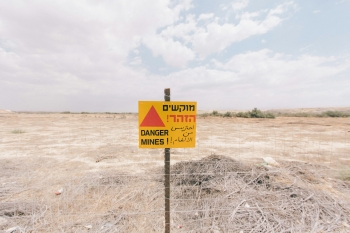
The Treaty, entered into force in 1999, puts Member States under some key obligations: never use, produce, stockpile, or transfer anti-personnel mines; destroy all stockpiled mines; clear all mined areas and assist victims of landmine explosions. The treaty has been ratified by 164 countries by now, to achieve the goal of restraining the negative effects that this type of weapon inflicts on civilians, even after decades since the end of hostilities. Anti-personnel mines kill or maim individuals, often children, without distinguishing between combatants and civilians. They affect people’s freedom of movement, access to agricultural land and right to development. Indeed, such weapons make land unsuitable for cultivation, and deny citizens access to water, food, hospitals and other vital infrastructures, hindering economic growth and development. Volker Türk, United Nations High Commissioner for Human Rights, has stated that the persistent and long-term risks of serious harm to civilians caused by these weapons far outweigh any military advantage that could be obtained by their use.
The Baltic countries’ withdrawal will take effect in six months, while Finland and Poland are understood to withdraw imminently . The intention to withdraw from the treaty is rooted in the perception that their national security is threatened, as the Russian invasion of Ukraine shows no signs of slowing down. Even President Volodymyr Zelensky has signed a decree proposing Ukraine’s withdrawal from the APMBC, but the decree is largely symbolic since state parties engaged in an armed conflict are not allowed to withdraw from the Treaty before the end of the hostilities.
Türk pointed out that adhering to bans on mines only in peace time and violating them in times of conflict puts at risk not only decades of human progress, but also the framework of International Humanitarian Law. Throughout the last two decades, the Ottawa Treaty has led to valuable results, such as reducing the number of countries producing landmines from 50 to fewer than 10 and large-scale clearance of former war zones.
Both the UN High Commissioner for Human Rights and a delegation of African states led by South Africa have asked the five European countries to “reconsider and return to the negotiation table” as “the challenges we face today require more cooperation, not less.”
Di Sonia Iovine
To read more, please visit:
https://www.hrw.org/news/2025/07/01/five-european-states-withdraw-from-mine-ban-treaty
https://www.icrc.org/en/article/FAQ-anti-personnel-mine-ban-convention-ottawa-treaty
