


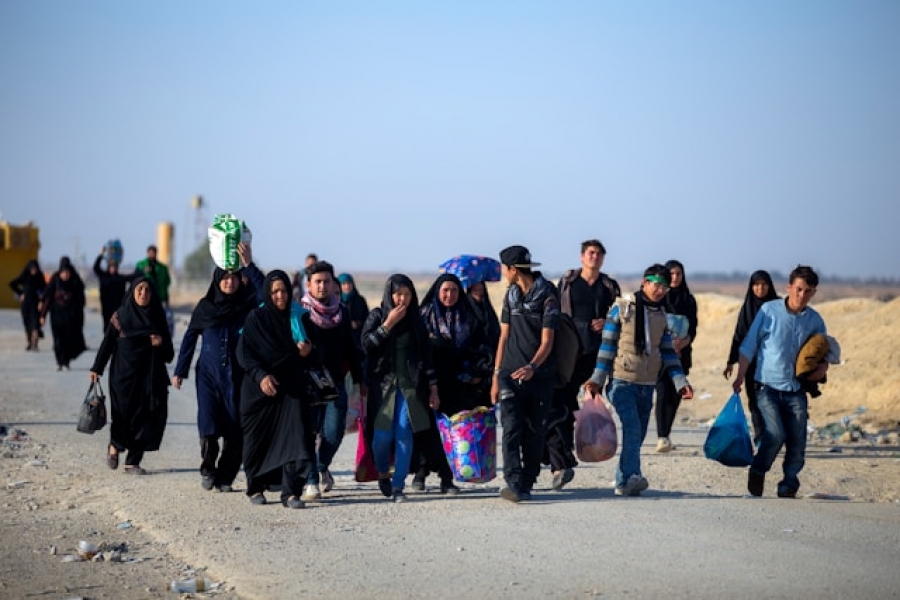
Nearly 8,000 migrant deaths were recorded worldwide in 2025, according to new data from the International Organization for Migration, underscoring a worsening humanitarian crisis. An estimated 340,000 family members have been directly affected. However, the most significant trend is not only the scale of fatalities, but what lies behind declining arrivals across several regions. Rather than reflecting reduced migration pressure, the data points to a transformation in migration patterns, as routes become increasingly fragmented, less visible, and significantly more dangerous. As emphasized by IOM Director General Amy Pope, migration routes continue to shift in response to conflict, climate pressures, and policy changes, while the risks faced by migrants remain substantial.
The 2025 Global Overview of Migration Routes shows that declining recorded migrant arrivals do not reflect a reduction in migration flows, but rather a redistribution of risk. Restrictive policies push migrants toward longer, more hazardous, and less monitored routes. As enforcement measures tighten along traditional corridors, migration does not stop; it adapts. In this process, risks are displaced rather than reduced, often shifting towards areas where oversight is weaker and access to protection more limited. In this context, data becomes essential not only for tracking evolving routes, but also for designing interventions aimed at reducing risks, saving lives, and promoting safer migration pathways.
This shift reflects a broader pattern in global migration governance. Disruptions along established routes, from the Central Mediterranean to the Western African Atlantic corridor, have contributed to the emergence of alternative pathways that are longer, more complex, and increasingly perilous. Along the Atlantic route to the Canary Islands, for instance, strengthened border controls have coincided with a decline in arrivals but an increase in the length and danger of journeys. Similarly, in the Americas, reduced northbound movements do not necessarily indicate diminished migration pressure, but rather a reconfiguration of routes in response to enforcement and policy changes.
IOM data further indicates that these dynamics are driven by the interaction of conflict, climate pressures, and economic instability, which continue to compel people to move despite increasing risks. At the same time, many migrants remain stranded in border regions with limited access to shelter, healthcare, and protection, while increased returns and relocations place additional strain on already fragile reintegration systems.
A critical implication of these trends is that migration is increasingly assessed through incomplete indicators. A focus on arrival numbers risks obscuring the more relevant metric: the human cost of increasingly dangerous journeys. As routes become more fragmented and less visible, deaths and disappearances are likely to be underreported, making the crisis both more severe and more difficult to address.
Without a shift in policy approaches, current trends indicate that reduced visibility will come at the cost of increased mortality. Ahead of the International Migration Review Forum in May, the IOM has called for the expansion of safe and legal pathways, the strengthening of search and rescue capacities, and improved international coordination as essential measures to prevent further loss of life. In the absence of such measures, the global migration system risks becoming not more controlled, but more lethal.


