


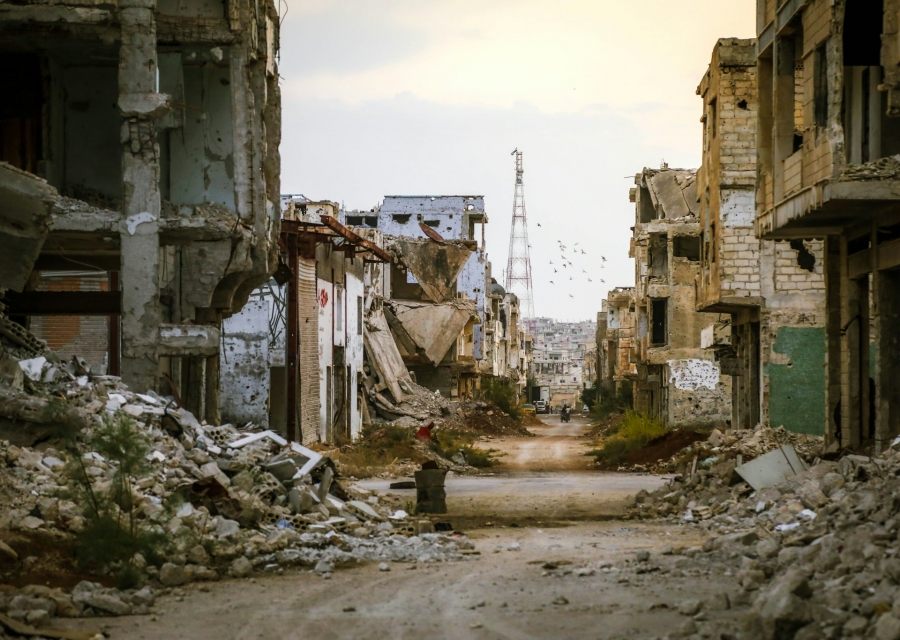
UN Deputy Special Envoy for Syria Najat Rochdi expressed concerns for the current state of Syria. One year after the fall of Assad, Syrians are still living in crisis. The transitional government is not able to stabilise the country, even though efforts are underway to fulfil the humanitarian needs of citizens and build diplomatic ties after years of isolation.
The UN Office for the Coordination of Humanitarian Affairs (OCHA) declares that 16 million people in Syria need humanitarian assistance, with 8 million displaced. OCHA was able to assist 357,000 people per month, proof of the reiterated interest in humanitarian assistance.
According to the European Civil Protection and Humanitarian Aid Operations, 14,6 million people suffer from food insecurity. The healthcare system is recovering slowly: only 60% of hospitals and 40% of primary healthcare centres are reported to be functional.
Everything seems to lead to the conclusion that a true plan for reconstruction is needed for long-term results, to be formulated with the diplomatic assistance and funding of the international community.
The humanitarian crisis is produced by difficulties to assist the population with little economic possibilities available, but also exacerbated by internal clashes. The province of Suwayda was plagued by violence from security services and the military against civilians. National security services were sent in the region to restore order after clashes between Bedouin tribal fighters and Druze civilians, but ended in humiliating acts, arrests and violence.
Essential to be further considered is the presence of Israel in the country. The 1974 Agreement on Disengagement, mediated through the UN, established a buffer zone to separate Syria and Israel. The latter is currently violating said agreement. Israel has been illegally occupying the southern Syrian territory since the collapse of Assad’s government. Moreover, continuous attacks were registered: Al Jazeera reports more than 1,000 air strikes and more than 400 ground incursions in the last year. Recently, Benjamin Netanyahu (Israel Prime Minister) visited Israeli troops in occupied Syrian territory. His visit was widely condemned, from government to UN envoys and representatives, as further proof of violation of Syrian sovereignty and territorial integrity.


