


UNRWA argues that Israel is breaching international humanitarian law by withholding essential aid to Gaza, despite there being sufficient supplies to sustain the entire population for months.
Natalie Boucly, UNRWA’s Deputy Commissioner-General, during a visit to Brussels, stressed that Israel, as the occupying power, has legal obligations under the Geneva Conventions and human rights law, obligations it is failing to uphold.
According to Boucly, 500–600 aid trucks per day are needed for Gaza, yet only about half, or even fewer, manage to enter due to restrictions imposed by Israel.
The issue is even more severe because UNRWA has stated that it has supplies ready for roughly 6,000 trucks, equivalent to three months of aid for Gaza’s population, but many of them remain stuck in Jordan and Egypt.
This criticism comes shortly after an advisory opinion issued by the International Court of Justice (ICJ) in October 2025, which ordered Israel to guarantee access to essential supplies and to cooperate with UNRWA.
The Hague Court concluded that Israel had violated obligations under the UN Charter and the Geneva Conventions, especially by blocking humanitarian convoys and attacking UN facilities.
The ICJ also rejected Israeli claims that UNRWA had been infiltrated by Hamas, deeming such allegations “insufficiently substantiated.”
According to international organisations, Israel’s refusal to open humanitarian crossings constitutes a pressure tactic that risks turning into systemic hunger.
Amnesty International states that preventing the entry of food, medicine, water, and fuel amounts to using starvation as a weapon of war—an act prohibited under international law.
Organisations such as Oxfam have highlighted that many NGOs are experiencing delays or are being excluded from providing assistance because the Israeli government has introduced restrictive procedures determining who may operate in Gaza, in violation of ceasefire agreements.
Despite the Court’s opinion, UN Secretary-General António Guterres declared that any mechanism limiting humanitarian space “down to the last grain of flour” is unacceptable.
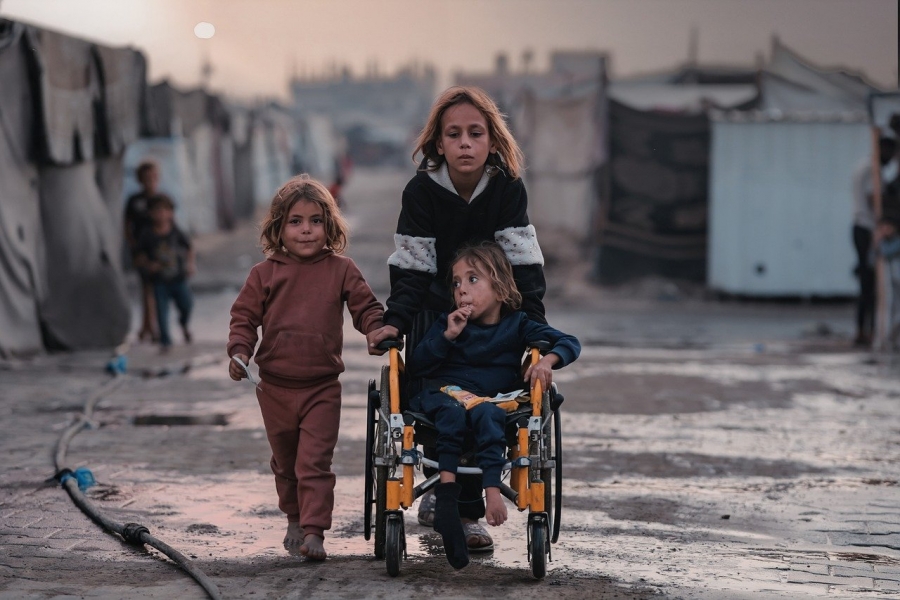
Boucly also warned that the continuation of the humanitarian blockade not only worsens the immediate crisis but risks further radicalising the population, especially children, many of whom have already experienced deep trauma and loss.
In conclusion, according to UNRWA and numerous international organisations, Israel’s conduct appears not merely as a political misjudgment but as a structural violation of international law, with potentially devastating consequences for the population of Gaza.


