


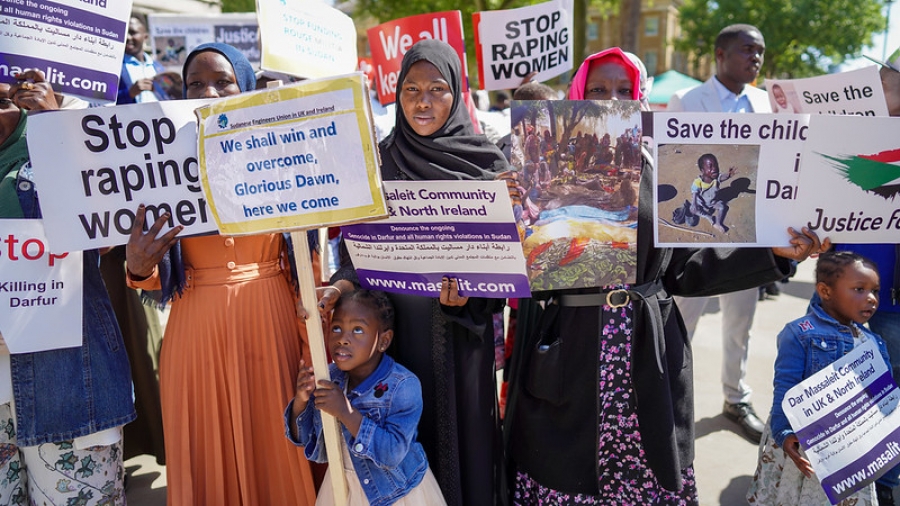
Briefing the UN Security Council, ICC Deputy Prosecutor Nazhat Shameem Khan said the Court has “reasonable grounds to believe” that war crimes and crimes against humanity are being committed in Darfur by both the Sudanese Armed Forces (SAF) and the Rapid Support Forces (RSF). Among the most alarming patterns is the targeted use of sexual violence, particularly against women and girls from specific ethnic communities.
“There is an inescapable pattern of offending, targeting gender and ethnicity through rape and sexual violence,” Khan said. Survivors have reported abductions, mass rape, and gender-based assaults, fueling fears of a deliberate strategy to terrorize and displace communities.
This announcement marks a major development in the ICC’s Darfur investigation, which has intensified as fighting between the SAF and RSF engulfs cities like El Fasher. Since April 2023, violence has surged across the region, with civilians increasingly cut off from humanitarian assistance and subject to direct attacks.
According to the UN Office for the Coordination of Humanitarian Affairs (OCHA), the humanitarian situation is alarming. Hospitals have been bombed, aid convoys looted, and relief workers killed. In June, five aid workers were ambushed in North Darfur, while airstrikes in West Kordofan killed over 40 civilians, including medical staff and patients. In El Fasher, RSF forces have surrounded the city, blocking all aid and shelling densely populated areas.
The ICC’s Darfur Unified Team has conducted repeated missions to refugee camps in Chad, gathering over 7,000 pieces of evidence. With support from the Court’s gender unit and local civil society, investigators are focusing on sexual and ethnic violence as central components of their casework. The Court also highlighted the pending verdict in the Ali Kushayb trial as a milestone for accountability and a warning to perpetrators.
Meanwhile, UN agencies and humanitarian organizations are racing to respond. The World Health Organization (WHO) is tracking a deadly cholera outbreak that has now crossed into Chad and South Sudan, while Médecins Sans Frontières and the International Committee of the Red Cross (ICRC) are struggling to deliver aid amid ongoing attacks. OCHA’s $2.7 billion humanitarian appeal for Sudan is less than 25% funded.
Khan acknowledged the immense challenges—limited access, obstruction on the ground, and weak international enforcement—but urged the global community to act. “We owe it to the people of Darfur,” she said, “to ensure that these crimes do not go unpunished.”
Without immediate accountability and access for aid, Darfur risks plunging further into what UN officials warn could become a repeat of the region’s darkest chapter—this time with fewer witnesses and deeper scars.


