


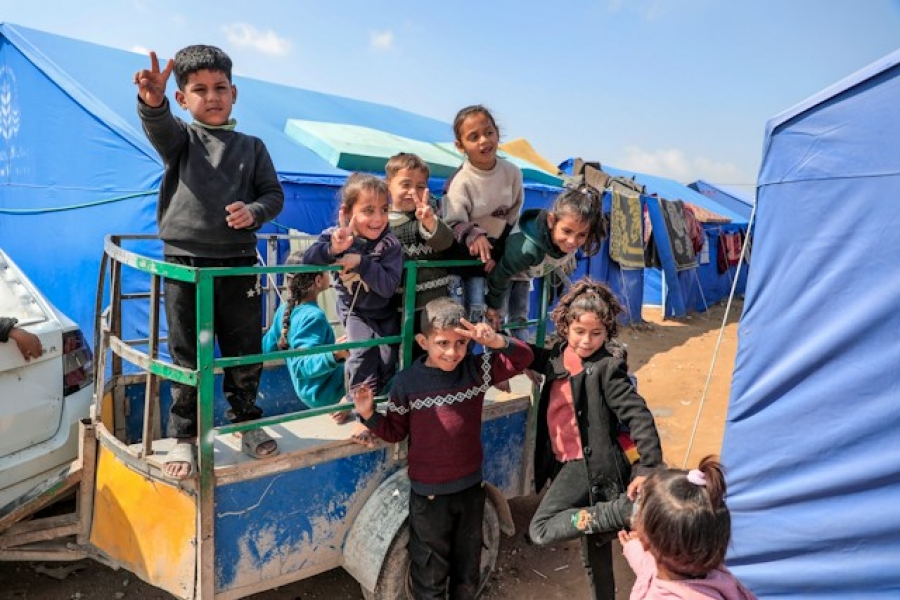
Between December 2024 and January 2026, the Palestinian Security Forces (PSF) and the Israeli Security Forces (ISF) conducted two large-scale security operations in refugee camps in the northern West Bank, resulting in widespread destruction and severe human rights violations. According to the thematic report published by the United Nations Office of the High Commissioner for Human Rights (OHCHR) in September 2026, by the beginning of 2026, an estimated 33,362 Palestinian refugees from the Jenin, Tulkarm, and Nur Shams camps remained displaced, and the ISF had issued demolition orders for a total of 514 buildings.
Security Operations, Civilian Harm and Forced Displacement
On 4 December 2024, the PSF initiated Operation Protect the Homeland, which, according to the security forces, served to prevent another catastrophe in the West Bank as happened in the Gaza Strip. However, the operation resulted in the disproportionate and unnecessary use of force against armed and unarmed Palestinians, causing nine killings, 300 unlawful detentions, and the use of tear gas to end peaceful marches coming from Jenin city to the camp asking for the end of the security operations.
Following PSF operations, on 21 January 2025, the ISF initiated Operation Iron Wall. Based on the report, the ISF did not try to minimize injuries, damage, or loss of life. On the contrary, Israel loosened its rules to allow soldiers to adopt the same operating methods used in Gaza. During the operation, the ISF entered the camps threatening to kill whoever didn’t leave, sealed all entries preventing humanitarian support from entering, and provided no alternative locations for residents. Within days of the start of operations, 90% of Jenin and Tulkarm camp refugees were forced out, and by February 10, a total of 40,000 Palestinians were displaced. Ten days later, the Israeli Minister of Defense announced that Palestinians from Jenin, Tulkarm and Nur Shams would not be allowed to return. After forced displacement, the ISF raided homes and destroyed the emptied camps by detonating buildings and burning homes. Only in some cases were owners given up to 72 hours to retrieve belongings. This was justified by the Israeli Supreme Court as a military need to ensure operational freedom for the military branch of the ISF.
International Legal Framework
International human rights law and international humanitarian law apply concurrently in the Occupied Palestinian Territory. As the occupying Power exercising effective control, Israel is bound by obligations arising under both bodies of law. Article 43 of the 1907 Hague Regulations requires the occupying Power to maintain public order and safety while respecting the existing legal framework. Sporadic armed resistance in the West Bank does not, by itself, justify replacing the current legal framework with the rules governing armed hostilities. Accordingly, lethal force by either ISF or PSF may be used only when strictly necessary to address a real and immediate threat to life.
The Fourth Geneva Convention also imposes specific protections on civilians and property. Article 53 prohibits destruction of private or public property unless absolutely required by military operations. Widespread destruction of homes, roads, and civilian infrastructure without demonstrated military necessity may therefore constitute unlawful destruction and, in serious cases, a grave breach and war crime. Article 49 further prohibits the forcible transfer of protected persons, except for strictly temporary evacuations required by civilian security or imperative military reasons. Displaced persons must be allowed to return once the justification ends. Unlawful forced displacement may also constitute a crime against humanity when carried out as part of a widespread or systematic attack against civilians.
Recommendations
OHCHR reiterates Israel’s obligations under international law, including the duty to end its unlawful presence in the Occupied Palestinian Territory as rapidly as possible and, pending that outcome, to ensure the protection of the Palestinian population and the provision of essential services and basic needs.
The report addresses recommendations to both Israeli and Palestinian authorities. Concerning Israel, OHCHR calls for an end to unlawful killings and injuries during operations in the West Bank and for all use of force to comply with international human rights law. It also urges Israeli authorities to halt the destruction of public and private property in refugee camps, guarantee unimpeded humanitarian access, and enable the safe, voluntary and dignified return of displaced residents. OHCHR further stresses the need for prompt, independent and effective investigations into alleged violations, prosecution of those responsible, and access to effective remedies and reparation for victims.
The Palestinian Authority is similarly called upon to ensure that its security forces comply with international standards governing the use of force and to investigate killings, arbitrary detention, ill-treatment and displacement linked to Operation Protect the Homeland. More broadly, OHCHR calls on the international community to strengthen civilian protection, ensure access for international bodies and support effective accountability mechanisms.


