


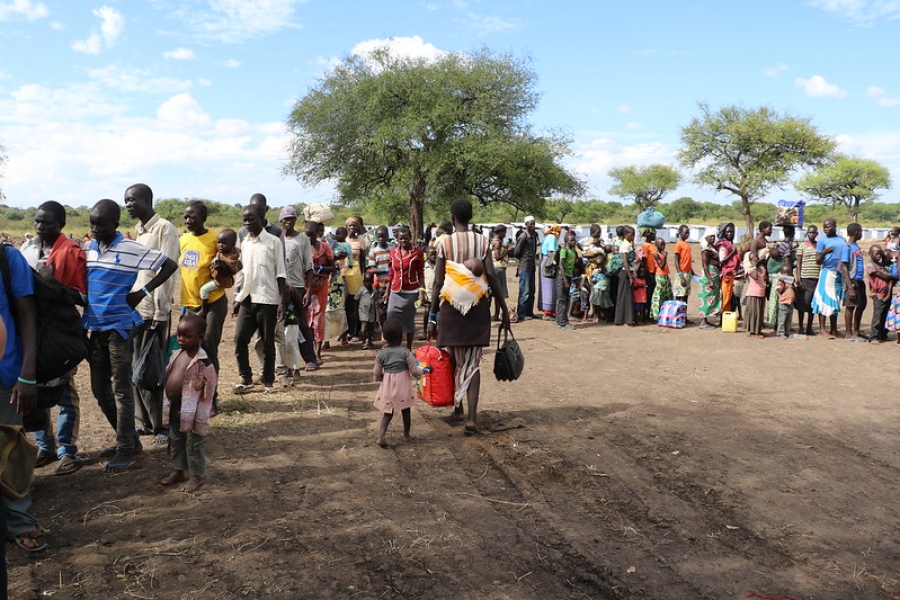
The UNHCR reports that the recent funding cuts experienced by numerous international organizations have had an immediate and detrimental effect on civilians. As of the end of February, the UNHCR had received only 14% of the funds expected to be $409.1 million. This figure falls short of the required amount to cover the full range of UNHCR's operations, including support for refugees fleeing the conflict in Sudan to Chad. These funds are crucial for the maintenance of healthcare facilities, educational institutions, and programmes aimed at safeguarding women and children from violence and exploitation. A salient example of this predicament is the 8,500 displaced children who have been deprived of access to secondary education this year due to a lack of funds to remunerate teachers. This constitutes a violation of a fundamental right, as outlined in Article 26 of the Universal Declaration of Human Rights (UDHR) which states that "Everyone has the right to education. […]"
Since the conflict in Sudan erupted on 15 April 2023, Chad has become the host nation for 1.3 million forcibly displaced individuals, including over 760,000 Sudanese refugees. The origins of this crisis can be traced to a power struggle between the Sudanese Armed Forces (SAF) and the Rapid Support Forces (RSF), a paramilitary group that helped elevate the leader of the SAF to a position of authority. The two forces collaborated in 2019 to overthrow the dictator Omar al-Bashir, who had been in power for 30 years, and General Abdel Fattah al-Burhan, the leader of the SAF, replaced him. Presently, the situation in North Darfur is deteriorating, resulting in a substantial number of casualties and an influx of internally displaced persons (IDPs) into the refugee camps.
In a recent statement, UN High Commissioner for Refugees Filippo Grandi asserted that these "brutal funding cuts" are indicative of a crisis of responsibility, with civilians invariably being the ones who suffer.


