


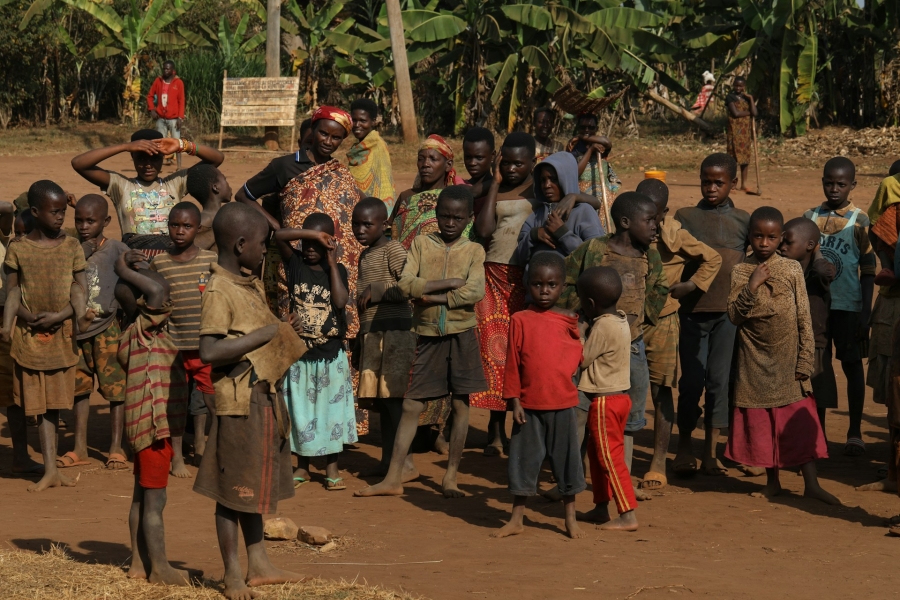
The surge in violence in DRC, due to the clash between M23 and government forces, is creating a climate of violence and insecurity and blocking the normal state of affairs, the economy, leading to famine. The population is experiencing one of the world’s worst and most neglected crises.
The M23 rebel movements are relentlessly attacking the eastern provinces of North Kivu, South Kivu, Ituri, and Tanganyika, while the Congolese army is responding with violent tactics. Mass killings and forced displacement are registered in the region: at the end of 2024, UNHCR declared more than 9 millions of displaced people and more than one million of asylum seekers.
Furthermore, according to the analysis of Integrated Food Security Phase Classification (IPC), 26.6 million people in DRC are expected to suffer from food emergency, identified as the IPC Phase 3 and above. This corresponds to severe malnutrition, little variety in diets, more need of medical assistance or death. Over 26.4 million people need humanitarian assistance. 14.2 million of them are children.
The Food and Agriculture Organization (FAO) and World Food Forum (WFP) both declared the urgency of the crisis in DRC, eager to boost their assistance in the region after a period of short-funding. FAO reached 217,000 people of the 3.6 million planned, by August 2025.
Renewed interest is declared by the European Union, which boosted the already stanced 120 million euros for Great Lakes region with another 9 million euros, specifically for eastern DRC.
The International Committee of the Red Cross (ICRC), represents a huge asset for humanitarian assistance in the region. In the period of January-September 2025, the ICRC distributed food to 12.000 civilians that were repatriated, installed essential water points in Irumu and Djugu territory and bolstered healthcare, aiding 40,410 people.
To further worsen the crisis, women have been targeted by sexual violence, as said by Shoko Arakaki, Direction of Humanitarian Affairs at the UN Reproductive Health Agency (UNFPA). Sexual exploitation, rape, abuse, coercion, dire conditions for birth, represent some of the gender-based problems registered in the eastern region. More than one third of women suffer from conflict related sexual violence .
Human Rights Watch, urges for resolution in the country, where perpetrators of violence are acting with impunity, from both rebel groups and state forces, due to the urgency of the crisis and the seriousness of the escalation leading to clear human rights violations.


