


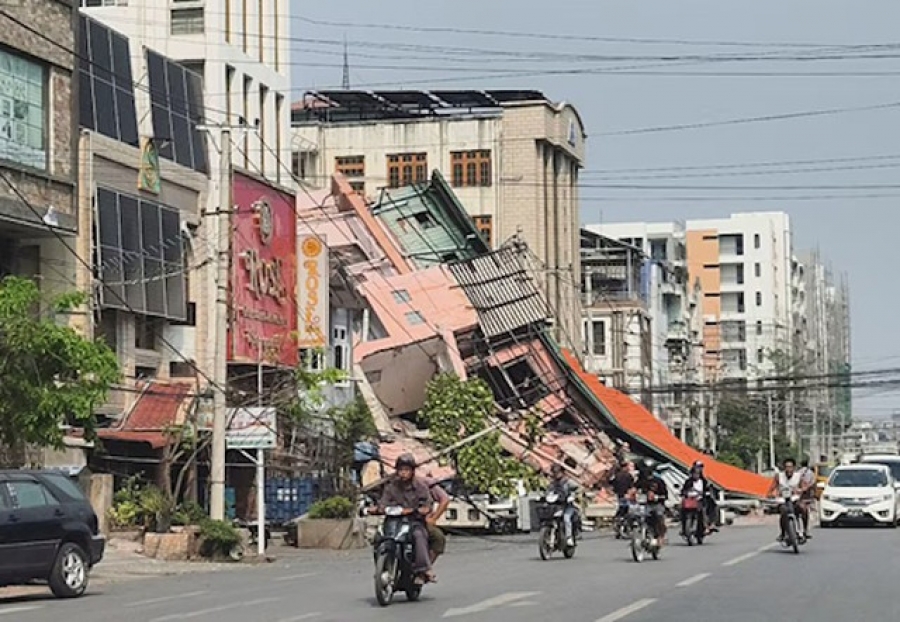
Over the past three months, Myanmar’s humanitarian crisis has worsened dramatically following a 28 March 2025 earthquake that killed nearly 4,000 people and left six million in urgent need of assistance.
Rather than facilitating relief, the military intensified airstrikes and artillery attacks, even in areas observing ceasefires. According to the UN Office of the High Commissioner for Human Rights (OHCHR), more than 600 strikes have been recorded since the quake, 94% during official ceasefires. Many targeted protected sites, including schools, shelters, and religious buildings.
In Rakhine State, long plagued by ethnic tensions, the civilian situation has become especially dire. The stateless Rohingya Muslim minority, confined to camps since the 2017 “genocidal intent” campaign, now also face bombardment by both the military junta and the Arakan Army (AA). According to a UN Development Programme (UNDP) report released in November 2024, Rakhine faces famine, with food production plummeting and blockades cutting off trade.
Across the country, civilians continue to bear the brunt of the war. Since the military coup in February 2021, nearly 6,800 civilians have been killed, and more than 22,000 remain arbitrarily detained. Public institutions have collapsed: hospitals are under-resourced, schools are shuttered, and infrastructure has disintegrated. The UN estimates that 22 million people—almost half the population—now require humanitarian aid, while nearly 80% live below or just above the poverty line.
The situation has fueled mass displacement. More than 3.5 million people are displaced within Myanmar, and approximately 1.3 million have fled the country. According to UNHCR, nearly one in five people attempting maritime escapes in 2025 have died or gone missing—a 30% increase from last year.
On June 27, UN High Commissioner for Human Rights Volker Türk briefed the Human Rights Council, describing Myanmar as a nation “gripped by war, repression, and deepening suffering.” He urged the military to stop the violence, release political prisoners, and restore humanitarian access. “We owe it to the people of Myanmar to make that hope a reality,” he said.
In 2022, UN Special Rapporteur Tom Andrews echoed Türk’s warning, emphasizing that Myanmar’s junta is “using aid as a weapon.” With the UN’s $1.14 billion humanitarian appeal only 12% funded, and a separate $275 million earthquake response appeal just 37% funded, Andrews warned that lives are at stake.
Despite well-documented atrocities, Myanmar’s military continues to act with impunity. While the UN, Human Rights Watch, and Amnesty International have called for urgent international action, many governments have reduced funding or remained silent. Without renewed political will, advocates warn, the country’s most vulnerable will continue to pay the price.


