


The report ‘The Accelerating Tragedy of Syria’s Displaced Failed Commitments, Forced Returns, and the Normalization of International Crimes’ was published by the International Center for Transitional Justice (ICTJ) and the Bridges of Truth (BoT) project. The first one is an international organization with the mission to bring light to the consequences of human rights violations. It advocates for victims’ dignity through lobbying and advocacyThe second one is a project implemented by nine civil society organizations, aiming at raising awareness on Syrian victims’ life conditions..
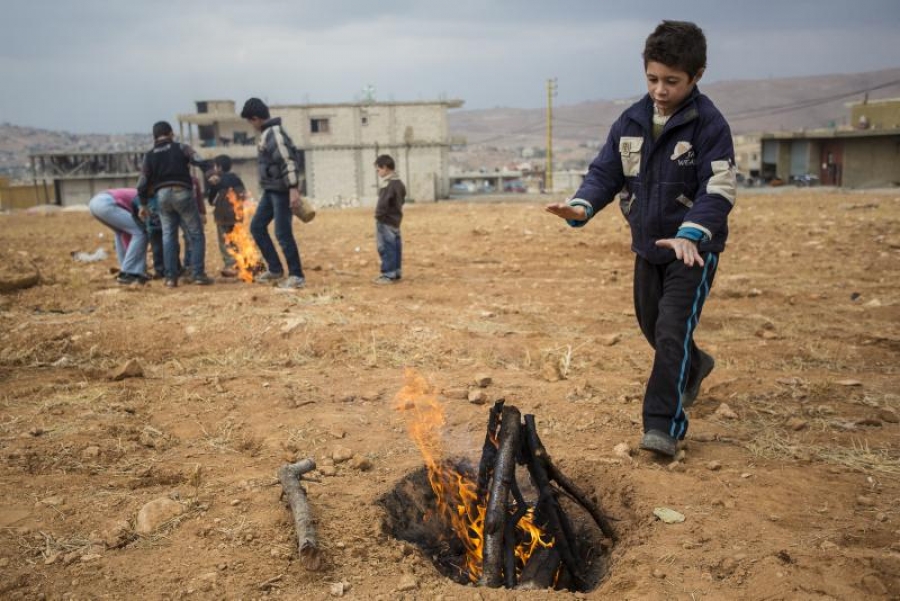
Published in December 2024, the report examines the legal path and difficulties that Syrian refugees face when they are forced to return. In fact, the humanitarian crisis that Syrians have been experiencing for over a decade as a consequence of internal conflict, , has forced more than 5.1 million civilians to find refuge in neighboring countries, and 7.2 million to live in camps as internally displaced. The situation was worsened by the Israeli invasion of Lebanon in September 2024, when cities and refugee camps were bombed, and both Syrian and Lebanese people sought refuge across the borders..
The origin of this civil conflict can be traced back in 2011, when the protests against Assad's regime escalated into a war between the government and the anti-government rebel groups, the first is supported by Russia and Iran and the latter by US and other allies, such as France and the United Arab Emirates.
Methodology
The report is based on a combination of primary and secondary sources, qualitative and quantitative data, including a survey, conducted in June 2024 with 100 participants from different regions of Syria, individual interviews with those that “voluntarily” chose to return, and official government statements. Statistics are taken, among others, from the United Nations High Commissioner for Refugees (UNHCR) and the Stockholm Center for Freedom databases. It also includes a review of testimonies and interviews of those deported or forcibly returned collected by ICTJ . However, due to the authoritarian regimes in Syria and in the host countries, accurate figures about forced returns and the real violations perpetrated by the authorities are hard to be obtained.
Key findings
Since the start of the internal conflict, more than 600,00 people have been killed, including 306,887 civilians among whom 3,129 children. Syria is an unsafe country for returnees due to arbitrary detentions, torture and forced disappearances. Despite political claims, with the so-called “safe returns”, the authorities perpetrate serious human rights violations. The principle of non-refoulement, protecting people from returning to their home country if they could be at risk of harm, is mainly violated.
The New Migration Pact, adopted in April 2024 by the European Union, obligates European countries to share responsibility for the refugees’ management. The Pact has been criticized by over 160 organizations as the concept of “safe third country” is not specified precisely, a thing that could lead to more political criteria for the lists. For example, Syria is frequently regarded as a secure third country, despite the fact that numerous returnees encounter the human rights violations previously outlined. A similar phenomenon occurs in the case of Lebanese individuals who come back to Lebanon.
In fact, according to Syrian and international CSOs which monitor returns, under the Migration Pact framework, at least 224 individuals were forced to return to Syria from Lebanon and Turkey during the period 2021 to 2024. For these countries, deportations can happen at any time and are often coupled with intimidation, threats and a lack of a fair - if even allowed - process.
Recommendations
As the primary problem is the lack of accountability, Syrians involved in the data-collecting are advocating to address past human rights violations. There should be an advancement of the rule of law through legal, constitutional, and institutional reforms to establish trust in the authorities. Moreover, stigma and differences should be addressed, to end the internal conflicts. In such a situation, humanitarian organizations play an important role as advocating for human rights respect through their work of reporting, as well as international prosecutions against perpetrators to promote accountability under the principles of universal jurisdiction.
To read more, please visit:
- The Accelerating Tragedy of Syria’s Displaced: Failed Commitments, Forced Returns, and the Normalization of International Crimes | International Center for Transitional Justice
- ictj_report_syria-forced-return.pdf
- Conflict in Syria | Global Conflict Tracker
- ThePrincipleNon-RefoulementUnderInternationalHumanRightsLaw.pdf
- Pact on Migration and Asylum - European Commission


