


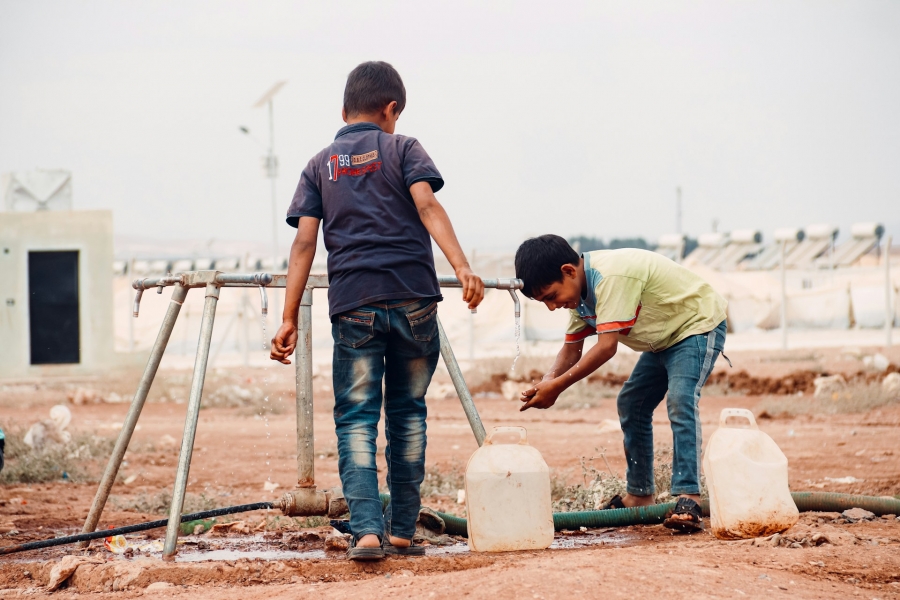
In the aftermath of the capture of Aleppo and the end of over 50 years of dictatorship, the report by Human Rights Watch on the guarantee of human rights sheds light on the dire
condition of Syrian civilians. A precarious reality manifests itself in economic, social, political, security, and freedom aspects, further worsened by the devastating earthquake that struck the country in February 2024. Humanitarian stress is palpable in every region and district: from government-controlled areas, where the protests in August were the most vibrant since 2011, to northern zones controlled by the opposition, where 4.1million people lack the resources to move or meet the requirements to seek asylum in Turkey. This is compounded by serious abuses, including arbitrary arrests, torture, and sexual violence in northern areas occupied by Turkey, as well as illegal detentions of over 60,000 individuals suspected of ties to ISIS and Syrian families from another 60 countries.
Currently, it is estimated that 90% of the Syrian population lives below the poverty line, with 12 million individuals lacking access to quality food and over 600,000 children chronically malnourished. Additionally, 15 million civilians have requested humanitarian aid, which struggles to arrive. Severe restrictions imposed by the government on humanitarian assistance and the failure of the United Nations (ONU) Security Council to renew the cross-border aid mechanism due to a Russian veto have deprived the population of essential goods. The position of women remains critical, facing discrimination in marriage, divorce, and child custody matters. Individuals with disabilities also face enormous challenges: not only is access to essential services limited, but educational enrollment rates are alarmingly low, with 60% of disabled children excluded from the educational system.
After 14 years of war, Syria has witnessed a massive exodus: over 12.3 million people have been forced to flee the country and 6.7 million are internally displaced (IDPs). These movements have generated anti-refugee sentiments in both Turkey and Lebanon. Ankara hosts 3.3 million Syrians and in 2023 repatriated thousands back to northern Syria despite ongoing instability. Beirut, with 1.5 million refugees, holds the world record for refugees per capita and has also repatriated thousands of Syrian civilians between April and May 2024.
The international community is beginning to take measures against those complicit in war crimes and crimes against humanity committed over the past 14 years. In addition to France, Germany, Sweden, also Canada and the Netherlands have initiated proceedings before the International Court of Justice for violations of the Convention Against Torture. At a multilateral level, the International Impartial and Independent Mechanism (IIIM), established by the UN General Assembly, is gathering evidence for future legal proceedings; meanwhile, the Organization for the Prohibition of Chemical Weapons (OPCW) has confirmed the use of chemical weapons during the conflict.
To read more, please visit:
________


