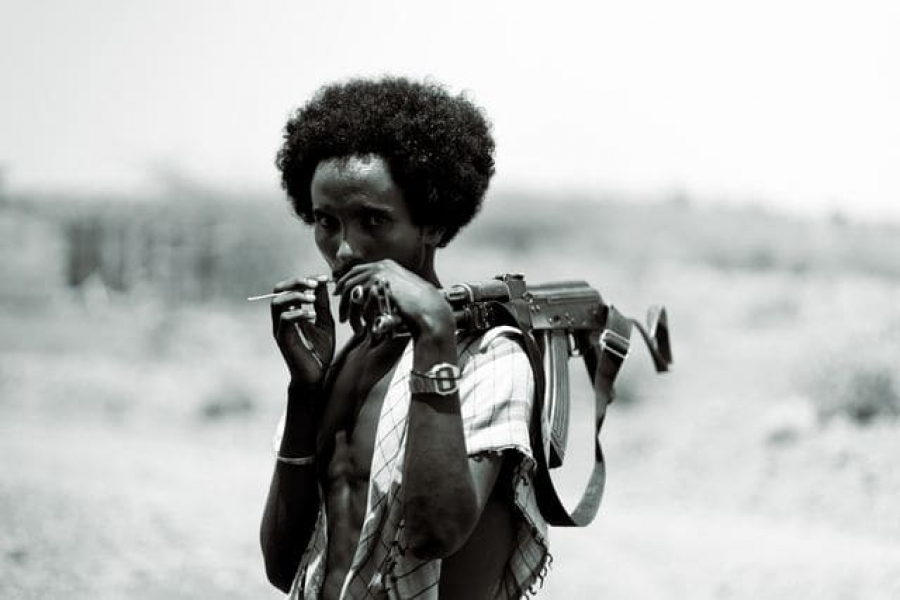
The escalation that began in Tigray in late September has reached a new threshold. After seizing several positions and the airports in Mekelle, Axum, and Shire on 23 September, forces linked to the Tigray People's Liberation Front (TPLF) ultimately withdrew from Mekelle. Ethiopian federal forces and their allies regained control of the regional capital on 4 October , according to Reuters and Al Jazeera.
However, this development does not signal a return to calm. The conflict now pits the federal government against a coalition of seven armed movements, including the TPLF, the Amhara Fano, and the Oromo Liberation Army (OLA). Their shared goal is to topple Abiy Ahmed’s government, yet their demands remain deeply divergent.
For civilians, the human toll is already alarming. MSF reports that the number of war-wounded patients admitted to hospitals in Korem and Alamata rose from approximately 180 to over 420 between 22 and 25September. In Shire, more than 300 wounded individuals were also treated. MSF has suspended certain activities in Alamata as well as its outreach operations due to insecurity.
The UN reports new displacements and particularly high risks for people already displaced by the 2020–2022 war. Restrictions on roads, telecommunications, and flights are also hampering the delivery of aid. Between 2025 and 2026, at least ten humanitarian vehicles were seized by armed groups, according to the UN Humanitarian Coordinator for Ethiopia.
Yet, international humanitarian law requires all parties to protect civilians and persons hors de combat. Ethiopia is a party to the four Geneva Conventions and to Additional Protocol II relating to non-international armed conflicts. Attacks on civilians and civilian objects, forced displacement, and unjustified impediments to humanitarian aid can give rise to liability for the perpetrators. Ethiopia is also bound by the International Covenant on Civil and Political Rights and the International Covenant on Economic, Social and Cultural Rights.
The African Union continues to view the November 2022 Pretoria Agreement as the central framework for resolving the conflict and has called for immediate de-escalation. For its part, the UN calls for the protection of civilians and for guaranteed safe and unhindered humanitarian access. The European Union has also insisted that respect for international humanitarian law is "non-negotiable," particularly following reports of attacks on humanitarian convoys.
The priority now is to prevent the retaking of Mekelle from becoming the beginning of a new, protracted war. Federal authorities, Tigrayan forces, and other armed groups should ensure the protection of the population, facilitate the evacuation of the wounded and the restoration of essential services, and allow humanitarian organizations to access affected areas. The ICRC already evacuated 161 people from Mekelle to Semera on 28 September, demonstrating that humanitarian mechanisms remain possible when the parties permit them.
The international community also possesses diplomatic leverage. The AU has tasked former Nigerian President Olusegun Obasanjo with re-engaging the parties, while the UN supports a resumption of dialogue within the Pretoria framework. Meanwhile, the EU has announced €61 million in humanitarian aid for Ethiopia, where needs are being exacerbated by conflict, displacement, and climate shocks.
The immediate stakes therefore go beyond control of Mekelle: the goal is to avert a new humanitarian disaster in a region that has not yet recovered from the aftermath of the previous war, and to safeguard conditions that allow civilians to remain protected, receive medical care, and access aid.
By Gael MOUTELI


