


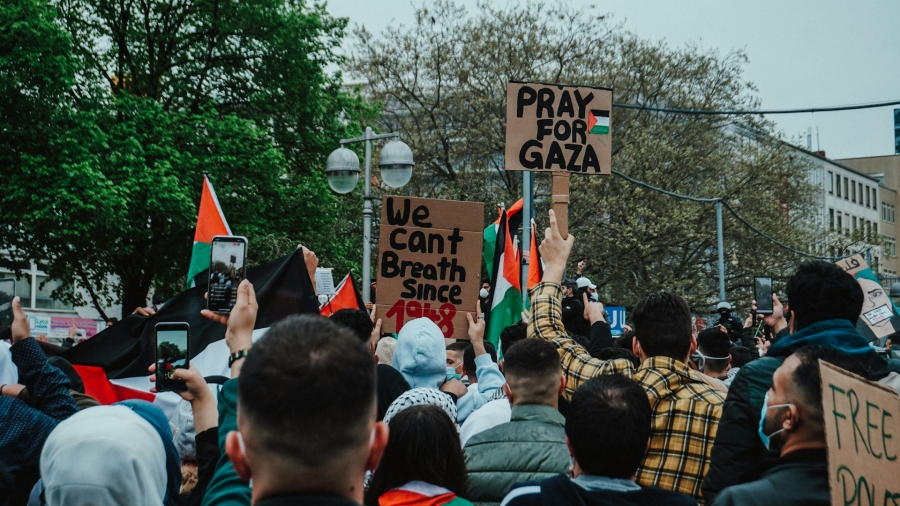
On 13 April, an Israeli airstrike in central Gaza killed at least three Palestinians outside of a school in Deir el-Balah. The attack, confirmed by medical sources at Al-Aqsa Hospital, occurred six months after a fragile and ineffective ceasefire was implemented, as civilians remain exposed to recurrent violence despite ongoing diplomatic efforts.
The strike comes amid a broader pattern of sustained military activity across the Gaza Strip. Since the ceasefire took effect on 10 October 2025, more than 700 Palestinians have reportedly been killed and nearly 2,000 injured, according to local health authorities. While the intensity of large-scale operations has decreased, hostilities have persisted through airstrikes, shelling, and ground engagements, contributing to a climate of constant insecurity.
Humanitarian organisations warn that the situation on the ground remains catastrophic. Medical teams operating in Gaza report repeated mass casualty incidents and an overwhelming number of trauma cases. Since October, tens of thousands of patients have required treatment for injuries caused by blasts, gunfire, and other forms of violence, placing enormous strain on an already weakened healthcare system.
At the same time, access to essential supplies continues to be severely restricted. Aid agencies highlight critical shortages of medicines, medical equipment, and basic materials such as sterile supplies, with direct consequences for patient care. The treatment of chronic conditions, including diabetes and cardiovascular diseases, has been particularly affected, increasing the risk of preventable complications and deaths.
Living conditions for civilians have also deteriorated sharply. Approximately 90 per cent of Gaza’s population has been displaced, many of them multiple times, and now reside in overcrowded shelters or informal camps. Limited access to clean water, food, and electricity has contributed to the spread of disease, with respiratory infections, skin conditions, and diarrhoeal illnesses among the most commonly reported health concerns.
Territorial fragmentation has further compounded the crisis. Large portions of Gaza remain under Israeli military control, effectively confining the population to shrinking and heavily damaged areas. Moreover, the presence of military activity along these perimeters has turned parts of the enclave into active combat zones, with few safe spaces remaining.
Beyond Gaza, tensions remain high in the occupied West Bank, where Israeli forces have conducted raids and arrests across multiple cities and towns. These operations, often involving searches and property damage, have contributed to a broader escalation of violence and instability across Palestinian territories.
Despite renewed diplomatic engagement involving regional and international mediators, efforts to consolidate the ceasefire have made limited progress. Key disagreements, particularly over disarmament and the sequencing of political arrangements, continue to hinder negotiations. At the same time, the possibility of a return to full-scale hostilities remains a persistent concern.
For civilians, the consequences are immediate and far-reaching. Without sustained international pressure, improved humanitarian access, and tangible progress towards a political settlement, the situation in Gaza risks further deterioration, with civilians continuing to bear the heaviest burden of the conflict.


