


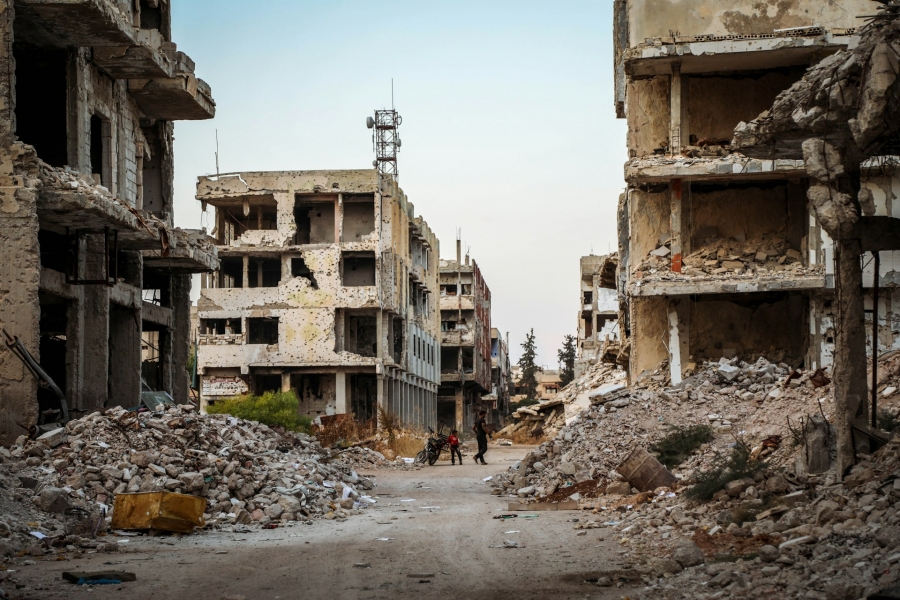
Civilians continue to bear the heaviest cost of the war, as regional violence has intensified following the USA and Israeli attacks on Iran on 28th February. Military attacks by involved parties have reportedly damaged or destroyed civilian infrastructures, including schools, medical facilities, humanitarian services and essential livelihoods across several countries in the region. Under international humanitarian law, those objects enjoy a special protected status and if attacks are found to be indiscriminate or directed against civilians or civilian facilities they consist of serious violations of international humanitarian law and may amount to war crimes.
In Iran, more than 1000 civilians have reportedly been killed, with thousands more injured and additional deaths still under verification. Among the victims are a large number of children. On 28th February an US strike reportedly killed and injured hundreds of girls in a primary school in Minab in the south of Iran. UN human rights office spokesperson Ravina Shamdasani stated that the images after this attack were horrific, capturing “the essence of destruction, despair and senselessness and cruelty of this conflict”.
At least ten medical centres have been damaged by US and Israeli strikes, facilities already under pressure following militarised raids by Iranian security forces during the January 2026 protest crackdowns, which saw widespread violations against patients and medical workers. Iranian authorities also recently reimposed a nationwide internet shutdown, cutting millions off from information about the hostilities and suppressing reporting on human rights violations.
The conflict has quickly escalated in Lebanon, where Israeli airstrikes in response to Hezbollah rocket attacks have killed and injured hundreds, displacing more than 30,000 people through mass evacuation orders, with thousands crossing into Syria. Israel has also targeted Hezbollah-affiliated financial institutions, raising serious concerns under international humanitarian law regarding indiscriminate and disproportionate attacks on civilian infrastructure.
In Gaza, humanitarian conditions continue to deteriorate amid ongoing hostilities and severe restrictions on aid delivery. The Rafah crossing, which had reopened for the movement of people on 2 February after nearly two years under Israeli military control, has been shut once more. All crossings into and out of Gaza are now closed. Aid agencies warn that fuel shortages threaten the continuation of essential services, including hospitals, water systems and humanitarian operations.
The US-Israeli war against Iran bears repercussions in neighboring countries, including Gulf countries, through missile interceptions, airspace closures and growing insecurity regionally. The disruption to supply chains and transport routes, including the Strait of Hormuz, are severely affecting humanitarian operations and the delivery of essential supplies across the region.
In an urgent call, Amnesty International Secretary General Agnès Callamard stated that civilians “should not pay the price for the unlawful and reckless acts by parties to the conflict, ravaging the principles of humanity and distinction at the heart of international humanitarian law and threatening the foundations of international peace and security.”
UN Secretary-General has also warned about the “multiplication of new fronts” in the conflict and the growing humanitarian consequences across the region, stressing that international humanitarian law is non-negotiable and must be respected by all parties. As violence spreads and civilian casualties rise, he has called for restraint and renewed diplomatic efforts to prevent further escalation and protect civilians from the devastating impact of the war.


