


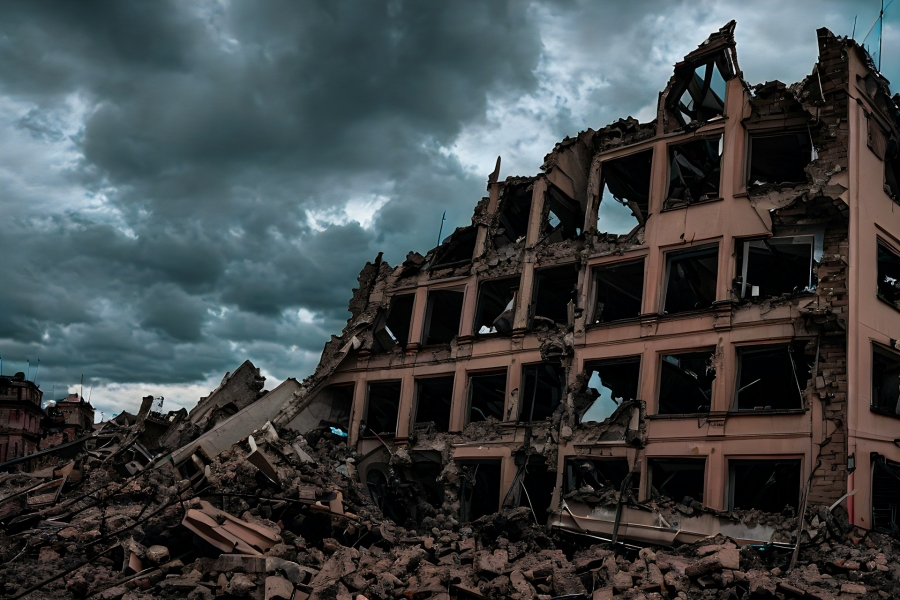
On the 9th of January 2026, Russia stated it fired its Oreshnik Hypersonic missile at Ukraine, specifically targeting a factory producing drones, as well as energy infrastructure. To justify its action, The Russian military said the attack was in response to an alleged attempt of drone striking on one of President Vladimir Putin's residences last month, by Ukraine. However, Kyiv has firmly denied such an attempt had ever occurred, stating, moreover, that Russia’s accusations are intended to further weaken peace talks.
Regrettably, dozens of civilians were killed or injured in the Port City of Odessa, where power and water supplies have been interrupted. On top of that, along with basic services, mobile communications and public electronic transport have also been disrupted. The occurance led the mayor of Dnipro to declare the state of emergency after what it was defined by the UN Spokesperson Stéphane Dujarric as “the largest combined attacks since the eruption of the conflict in 2022”.
Furthermore, among the civilians there are older people, people with health conditions and families with children who are victims of much greater suffering, as stressed by UN Humanitarian Coordinator for Ukraine Matthias Schmale.
Meanwhile, organizations such as Food and Agriculture Organization (FAO) and The UN Children’s Fund (UNICEF), as well as over 20 UN agencies are contributing to the improvment of civilians’ conditions by providing, inter alia, psychological support, access to education, maternal and child health, winter supplies and warm blankets and a newley released emergency response and early recovery plan.
by Ylenia Bobbo


