


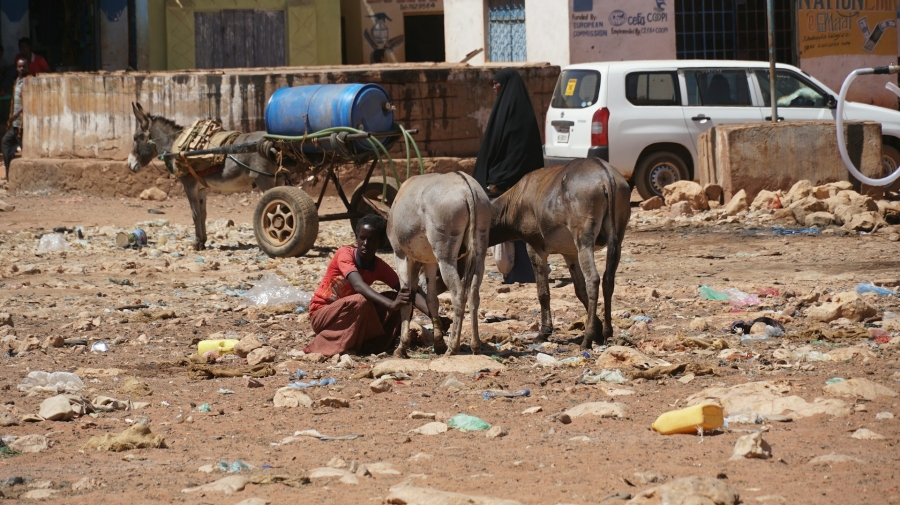
In early October, the International Federation of Red Cross and Red Crescent Societies (IFRC) highlighted the need for 25 million Swiss francs, around 17 million euros, to address the worsening humanitarian situation affecting millions across Somalia. The country, already plagued by decades of armed conflict, economic fragility, and climate-driven instability, continues to struggle amid limited resources and insufficient funding.
As Naemi Heita, IFRC Head of Delegation, noted, persistent droughts caused by inadequate rainfall are deepening the crisis. Around 2.5 million people are now in urgent need of food, water, and essential services. Temporary remedies are currently being pursued, including sharing scarce resources and reducing meals, but more effective solutions are required. Years of repeated climate shocks have eroded traditional coping mechanisms, leaving many households with no reserves or alternatives.
The Somali Red Crescent Society (SRCS) remains at the forefront of the response. With more than 21,000 staff and volunteers, the organisation continues to deliver healthcare, clean water, sanitation, shelter, and food assistance, reaching areas often inaccessible to international partners. In 2024 alone, over 1.2 million people received life-saving support. Yet, as stressed by SRCS President Yusuf Hassan, the scale of need far exceeds current resources. Despite the society’s remarkable resilience, stronger international engagement is essential to expand the reach of its humanitarian operations. Challenging conditions exacerbated by insecurity, damaged infrastructure, and limited funding undermine the work of local responders.
Greater donor commitments, although vital, must be accompanied by strategies that address the root causes of instability. Competition over limited resources has long fuelled tensions and violent clashes among neighbouring communities. A study funded by Germany and coordinated by officers from the International Organisation on Migration demonstrated that shared management of scarce resources can foster coexistence and ease conflict. Improving equitable access to water, pasture, and arable land can therefore serve both humanitarian and peacebuilding objectives.
While the study offers cautious optimism, the most urgent challenge remains the severe funding shortfall. Only a little over 20 percent of Somalia’s $1.42 billion 2025 Humanitarian Needs and Response Plan has been financed. As a result, the World Food Programme (WFP) has already announced that it will reduce the number of people receiving emergency food assistance from 1.1 million to 350,000.
The SRCS now aims to strengthen farming, fishing, and pastoralist communities through climate-smart initiatives that protect livelihoods, restore ecosystems, and build long-term resilience. Integrating gender, protection, and inclusion across all activities, the IFRC and SRCS are urging donors, governments, and partners to help close the funding gap and support a sustainable future for the people of Somalia.
To read more, please visit:
- https://www.ifrc.org/press-release/somalia-ifrc-launches-chf-25-million-appeal-drought-deepens-humanitarian-crisis
- https://www.unep.org/news-and-stories/story/german-backed-climate-action-somalia-offers-lessons-ahead-berlin-climate-and
- https://www.securitycouncilreport.org/whatsinblue/2025/10/somalia-private-meeting-3.php


