


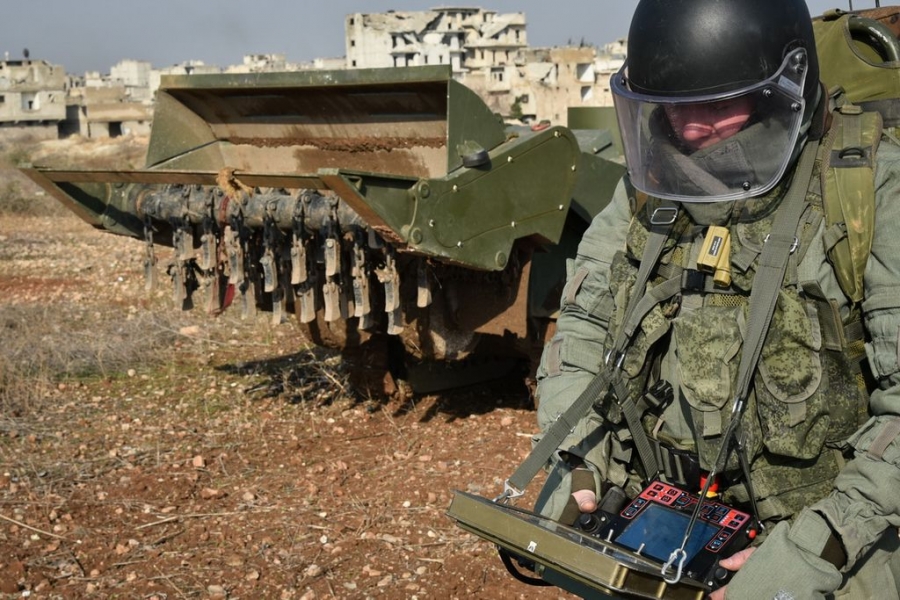
Landmines and explosive ordnance (EO) are scattered across Syria's territories and this pervasive presence constitutes an escalating problem, as it poses a threat to the lives of civilians. According to the Syrian Network for Human Rights (SNHR), since the start of the civil conflict in 2021, 3,471 civilians, including 919 children, have been killed by antipersonnel landmines. According to the International NGO Safety Organization (INSO), which provides free safety and security services to NGOs working in conflicted areas, at least 249 people, among whom are 60 children, have been killed and 379 have been injured by explosive ordnance since 8 December 2024. The Human Rights Watch affirms that the majority of these casualties have occurred in rural and agricultural areas, as well as in urban areas. This substantial escalation in mortality can be attributed to the mass movement of displaced individuals returning to their places of origin. This situation engenders a state of psychological distress among civilians, who experience a sense of insecurity increased by a lack of information and therefore awareness regarding the prevailing dangers. This lack of communication from the transitional government is one of the reasons for the many incidents. Furthermore, the destruction of property has resulted in displacement, diminished living standards, and constrained access to essential services such as shelter, healthcare, education, and basic amenities. Moreover, the psychological impact of these experiences often necessitates long-term access to medical care and mental health support, which are often challenging to obtain.
The prevalence of EO in Syria can be attributed to the protracted nature of the country's internal armed conflict. Since 2011, the regime of President Assad, supported by Iran, Russia and Hezbollah, has been confronted with challenges, leading to a civil conflict between the regime and the rebels, a coalition between the Islamist militant group Hayat Tahrir al-Sham (HTS) and the Syrian National Army (SNA) backed up by Turkey. This protracted struggle ultimately culminated on December 8, 2024, when the rebels, following a 10-day offensive, succeeded in overthrowing the Assad regime, which had been in power for five decades. As reported by the Global Conflict Tracker, the deposed President Assad sought refuge in Moscow, and the numerous prisoners detained by his regime have now been released. The justification for the presence of the EO in the region is further explained by the Israeli military's increased air strikes on Iran and Syria.
Human Rights Watch recommends the transitional government, urging the establishment of a national, civilian-led mine action authority and center. This body should collaborate with the UN Mine Action Service (UNMAS) to clear landmines and explosives, coordinate efforts on a nationwide scale, establish clear standards, and update registration rules to support humanitarian mine action work.


