


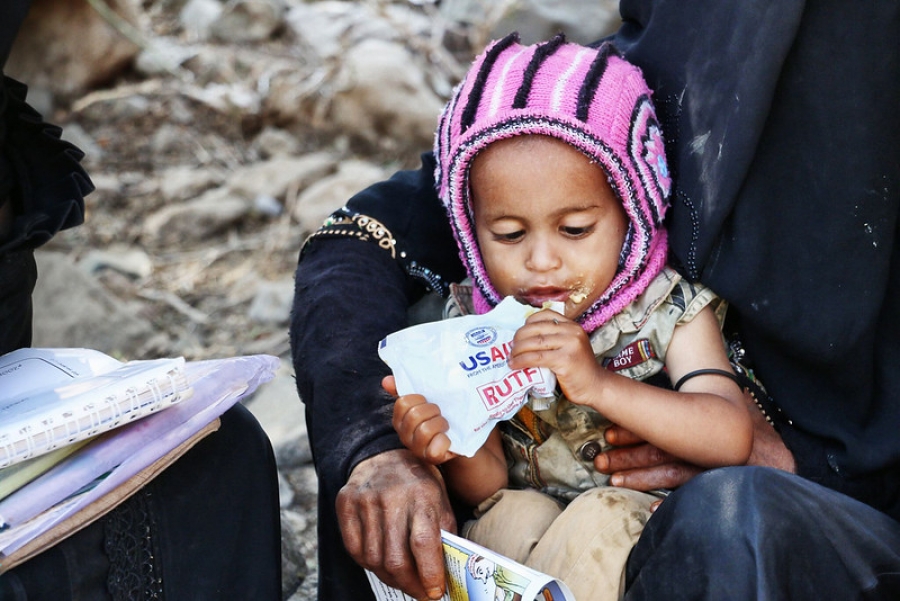
The UN reports the situation in Yemen is worsening, and people have given up hope that things will get better. UNICEF affirms that more than 540,000 children and 1.4 million pregnant and breastfeeding women suffer from acute malnutrition. This condition weakens their immune systems and puts their lives at risk.
Blockades at ports and along key roads are preventing food and medicine from reaching critical areas. UNICEF local health facilities are working to bring in as many aids as possible to treat malnutrition in the country, but, due to funding cuts, only 25% of the budget needed is available. In addition, airstrikes are damaging the port cities like Hudaydah and killing civilians, including 8 children in northern Yemen.
The Ansar Allah group, more commonly known as Houthi rebels, has been fighting the government for more than a decade. The roots of the conflict can be traced back to the Arab Spring of 2011, when Houthis started a fight to overthrow the government of President Abd Rabbu Mansour Hadi, which happened in March 2015. The government was supported by the Saudi-led coalition, backed by the US, UK and France. They began bombing the Houthi-controlled province of Sanaa. It was not until April 2022 that a UN-brokered ceasefire was reached.
More recently, in March, the US attacked Houthi-controlled areas of the country, which continue to suffer from attacks on merchants and commercial vessels fleeing Gaza through the Red Sea. The decade-long conflict has devastated the country's infrastructure - particularly its health system - and left 20 million people in the country dependent on international aid to survive. According to Rescue.org, 9.5 million people are estimated to be in need of aid, 7% more than last year, and 4.5 million are internally displaced. Over 83% of the population live in poverty.
On March 6, Hans Grundberg, Special Envoy of the Secretary-General for Yemen reported to the UN Security Council that there is an increased possibility that the truce won’t hold. Peter Hawkins, the UNICEF representative in the country, affirms that this is not an emergency anymore, but a humanitarian crisis.


