


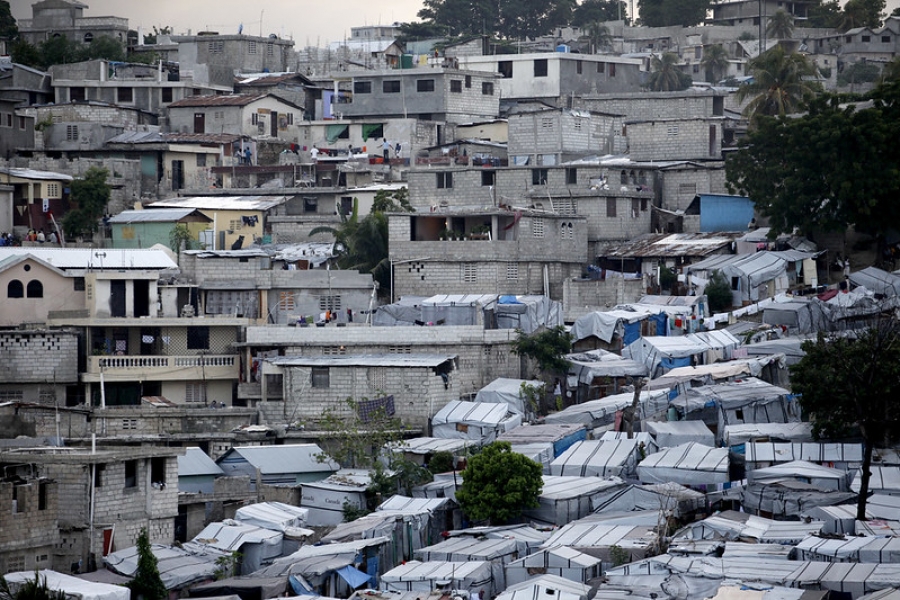
UN reported about the situation in Haiti, i, where a number of gangs use violence on a daily basis, killing, raping and destroying properties. The aim is to “infiltrate all spheres of society”, said William O’Neill, the UN human rights office’s designated expert on the country.
The Haitian National Police (PNH), with the help of the Multinational Security Support (MSS) Mission, are trying to keep the situation under control. However, their efforts are not enough to control these gangs. Survivors recalled the horrors they experienced, shading light to this forgotten crisis. Among them, there is a 16-year-old girl who survived an attack by one of these gangs in her home. They raped her stepmother and her and killed her dad in front of them. A 12-year-old boy reports he was forcibly recruited by the gangs and now spends his life in the Centre de Rééducation des Mineurs in Port-au-Prince, accused of gang association.
The consequences of this violence are spreading over the neighboring countries, with 48 displacement sites in all, where more than a million people have fled in the past weeks. Grégoire Goodstein, the UN head of the International Organization for Migration (IOM) in Haiti, spoke of the precarious situation of families aggravated by previous displacements.
Poverty, the legacy of colonialism and the effects of deforestation are among the causes of their origins. However, the state's dependence on the gang as a "cheap armed wing" has had an impact on gang formation. Its origins can be traced back to the 1990s, after a military coup overthrew President Jean Bertrand Aristide, who used the gang to try to regain power in December 2001. In 2023, the UN documented at least 4,451 victims, and in the first three months of 2024, more than 1,500 people were killed as attacks increased following the resignation of Prime Minister Ariel Henry.


