


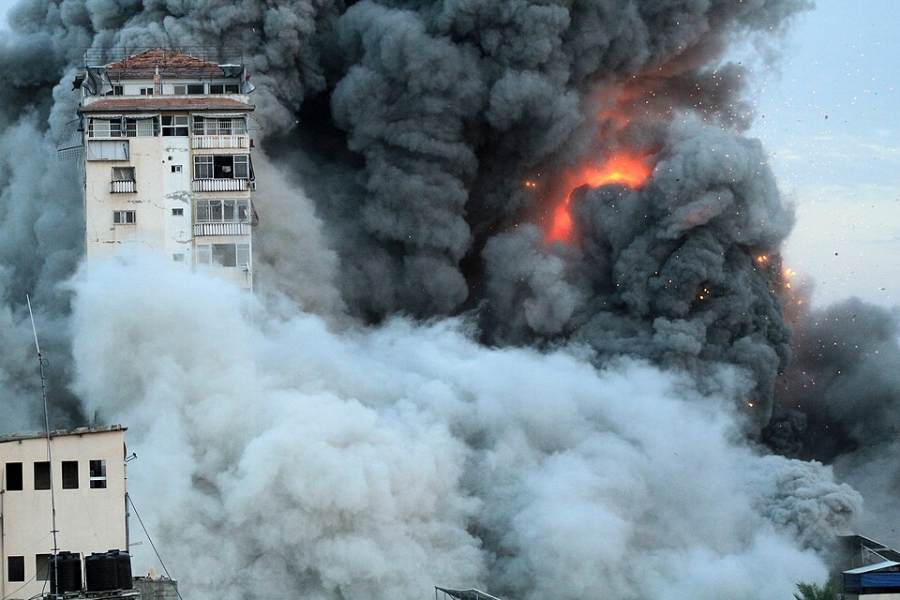
On Tuesday night, the State of Israel launched a military offensive against the Gaza Strip, targeting major cities such as Gaza City, Rafah and Khan Younis. The BBC reports that the Israel Defense Forces (IDF) have asserted that the objective of the operation was to intimidate specific targets within Hamas forces. However, the attack resulted in 400 civilians confirmed deaths, although the number of fatalities is likely to be higher, reports the Hamas-run health ministry. Notably, the strike also resulted in the deaths of five senior Hamas officials, including Mahmoud Abu Wafah, the deputy interior minister in Gaza. The attack was purportedly a response to Hamas's decision to not release the 59 hostages from the 7th of October, 2023. The decision of Israel to initiate further hostilities has drawn criticism from the families of the hostages, who perceive it as a deliberate choice to relinquish their release. They fear that the hostages will now bear the consequences and gather outside the Israeli Parliament to protest, demanding the resignation of Netanyahu.
Survivors have reported to the BBC that many of them were celebrating Ramadan. Rosalia Bollen, from the UN's children's charity UNICEF in al-Mawasi, Gaza, reported the horror of the attack, saying that bombs every five seconds and lasting overall for 15 minutes. The Hamas-led health ministry affirms that the health system, already overburdened by the victims of the previous strikes, is that 25 out of 38 hospitals are out of service. Furthermore, medical personnel were not unavailable as the attack was sudden. This will result in an increase in the number of casualties, as the affected individuals will not receive adequate medical treatment. Hamas has accused Israel of breaching the ceasefire, in violation of international humanitarian law (IHL), and of perpetrating genocide.
The armed conflict started on October 7, 2023 when Hamas launched an attack on Israel, killing 1,200 people. This triggered a response from Israel. However, since the start of the war more than 46,700 people have been killed in the Gaza Strip and 2.3 million of people had to flee from their homes. The conflict also triggered a humanitarian crisis, due to the damages to the health system, and a food crisis. A ceasefire was reached in January but now it is compromised.
In the wake of the recent escalation in hostilities, Danny Danon, Israel's ambassador to the UN, has asserted that the nation will not show any mercy towards its "enemies" in Gaza. This approach, characterized by its lack of restraint, has resulted, and will result, in a significant toll on civilians. This situation should serve as an incentive for the international community to provide further medical aid to Gaza and to redouble its efforts to encourage the parties to reach a negotiated agreement.


