


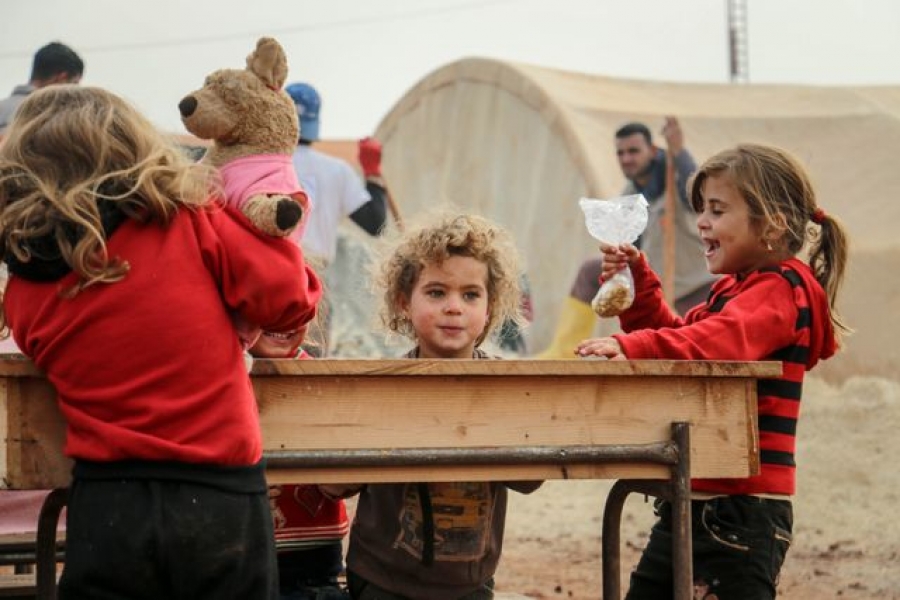
The report reveals that in 2025, violations against children in armed conflict reached an unprecedented number. Around 24,174 minors were affected by grave violations of human rights, the highest number registered in 30 years by the United Nations (UN). Parties globally continue to commit serious violations with impunity, repeatedly failing to comply with international humanitarian law. According to the report, government forces, rather than non-state actors, appear to be mostly responsible for the majority of the violations, including killing and maiming, attacks on schools and hospitals, and exploitation of children in military operations. This alarming trend is further corroborated by the International Committee of the Red Cross (ICRC) in its 2024 report on International Humanitarian Law, which documents a steady rise in state-led violations over the years. This data is particularly troubling, as it indicates that state authorities, tasked with strictly upholding international humanitarian law, are increasingly violating it.
The report covers the period from January to December 2025, documenting the main trends regarding human rights violations against children, alongside incidents that occurred in previous years but were verified in 2025. Methodologically, it follows UN Security Council Resolution 1612, utilising the Monitoring and Reporting Mechanism (MRM), objectively verifying six grave violations against children: killing and maiming, recruitment, sexual violence, attacks against schools or hospitals, abduction, and denial of humanitarian access. Beyond quantitative data, the accompanying annexes contain a list of parties involved in the violations, including a “blacklist” of government forces from several Member States of the UN. The report also notes that these figures do not reflect the full scale of the violations, but only those verified directly by the UN, based on the access the organisation has to the affected areas.
Categorising violations state by state, the report identifies killing and maiming as the largest category of violations globally in 2025, accounting for roughly 26% of all verified incidents. Geographically, the African region reported the highest overall number of violations against children, accounting for 40% of global cases across fourteen conflicts. However, the Middle East accounted for over 27% of all violations across just four situations. Because of this extreme concentration per conflict, the Middle East emerges as the true epicenter of the crisis in 2025. What also emerges from the report, as reflected in global news coverage, is that the situation in Israel and the State of Palestine appears to be the most concerning, accounting for 80% of all violations that occurred in the Middle East and 22% of all violations recorded globally. These figures are deeply concerning when considering that the second most affected situation, the Democratic Republic of Congo, accounts for 9% of total violations against children.
The report concludes with recommendations based on its findings, reminding Member states to follow the international legal framework, calling for the prohibition of explosive weapons in areas densely populated by civilians, the protection of child-critical infrastructure, and ensuring strict control over advanced military technologies. Furthermore, it urges adherence to the international justice mechanism, demanding that children be treated primarily as victims, and eliminating detention for association with armed groups. The recommendations also appeal to tech companies, calling for greater scrutiny of their platforms to prevent the recruitment of children.
Finally, the report highlights the role of funding for long-term child protection. In fact, according to data collected by ACAPS, the US decision to cut funding for humanitarian aid has caused severe systematic disruption, escalating risks for vulnerable minors. A Stockholm International Peace Research Institute (SIPRI) publication by Jonathan Hall and colleagues reinforces these priorities by emphasising the necessity of aid-supported mental health and psychological development programs. These findings were also reflected in the UN debate on the report, during which Catherine Russell, Executive Director of the United Nations Children's Fund (UNICEF), emphasised the need for targeted plans for indirect consequences of conflicts, like displacement and education loss. Jainaba Jagne, African Union Special Envoy, stressed that child protection requires continuous investment in long-term reintegration, a priority reinforced by data from the Office of the United Nations High Commissioner for Refugees (UNHCR), which shows that minors represented 39% of the world's forcibly displaced population in 2025.


