


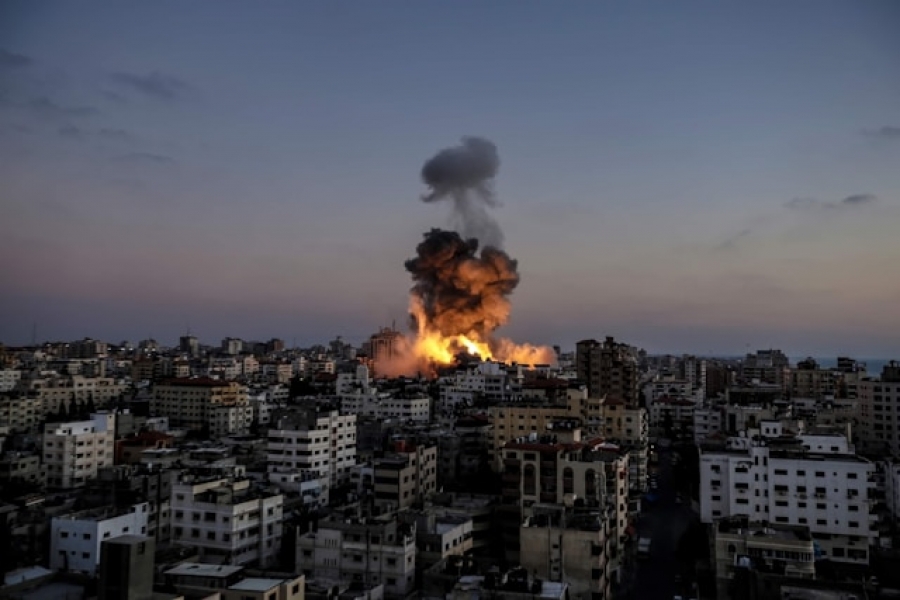
The escalating violence against humanitarian aid workers is part of a disturbing global trend that puts those providing life-saving assistance to millions of people at growing risk. Across conflict-affected and fragile contexts, humanitarian personnel are increasingly exposed to attacks, abductions, injuries, detentions and other forms of violence. The massive and more frequent use of explosive weapons and armed drones is changing battlefields worldwide, targeting more and more directly civilians and humanitarian staff. In addition, restrictions on humanitarian access and shrinking funding are making it harder to reach those in need. Disinformation and smearing campaigns are eroding public trust in humanitarian organisations and further limiting their ability to operate.
On World Humanitarian Day, the last figures on the security situation for humanitarian personnel from the Aid Worker Security Database tell an appalling truth. In 2025, 1,187 aid workers globally were victims of security incidents. Among these, 350 workers were killed, the second highest toll ever recorded. The number of humanitarian staff kidnapped and wounded dramatically increased in comparison to the last five-year period, highlighting a general deterioration of the security environment in which they operate.
The risks are higher in some of the world’s most severe humanitarian crises. Gaza was the deadliest context in 2025, with 186 humanitarian workers killed, most of them as a result of aerial bombardment (68%). In Sudan, the number of humanitarian fatalities increased for the fifth consecutive year, with 71 aid workers losing their life, primarily to small arms fire. Other high-risk locations included Ukraine, Ethiopia, Syria, Haiti, Chad and Cameroon, where kidnapping and aerial bombing represented the most frequently documented forms of violence. Incidents targeting humanitarian workers erupted particularly in the Democratic Republic of Congo (DRC), where the numbers of attacks doubled compared to 2024. The intensified use of drones and explosive weapons in urban battlefields is increasingly affecting humanitarian operations and putting aid workers and civilians at deadly risk, as seen in particularly in Ukraine.
States remain the main perpetrators of violent security incidents against humanitarian personnel, while attacks by non-state actors and criminal groups are on the rise. In 2025, road travel continued to pose the greatest danger for aid workers (27% of all violent incidents), followed by attacks against organisation offices, compounds and project sites. State detention and arrests of humanitarian workers are highly concentrated in five countries -Yemen, South Sudan, DRC, Myanmar and Palestine - with Yemen alone representing one-third of all cases in 2025.
Recent analysis found that national staff bear brunt of record violence against humanitarian workers: over the past five years, more than 3,000 local aid workers were affected by security incidents, compared to 134 international staff. National employees, who are at the forefront of the emergency response, continue working inside communities under precarious and insecure conditions, often the least equipped to demand accountability when violations occur.
Despite the adoption of the UN Security Council resolution 2730 in 2024, which addresses the protection of humanitarian personnel in armed conflict, attacks against them are rising with near-total impunity. This exposes a persistent and systemic failure by state actors and military groups to respect humanitarian operations and infrastructures, rising issues of accountability, political commitment and enforcement mechanisms. Beyond direct attacks, humanitarian workers are also increasingly criminalised, considered as security threats, denied access, or detained simply for doing their jobs, a pattern that has hardened in contexts like Gaza. At the same time, funding cuts are compounding the danger: as reported by the Global Humanitarian Overview 2026, the sector faces "funding cuts without historic precedent," leaving organisations to choose between staff safety and delivering life-saving services at all.
To counteract these trends, the UN Secretary-General calls for concrete action: an end to attacks on humanitarian aid workers, renewed respect for international humanitarian law, and accountability for violations. Humanitarian organisations go further, urging states to unequivocally and publicly condemn such attacks, while pursuing sustained diplomacy to secure principled, safe aid access. This demands high-level engagement to keep the safety of aid workers on the political agenda, together with stronger enforcement of existing laws and norms. Without it, both delivering and receiving assistance risk becoming life-threatening by default, a cost that is already being paid by millions of people in the most fragile contexts.


