


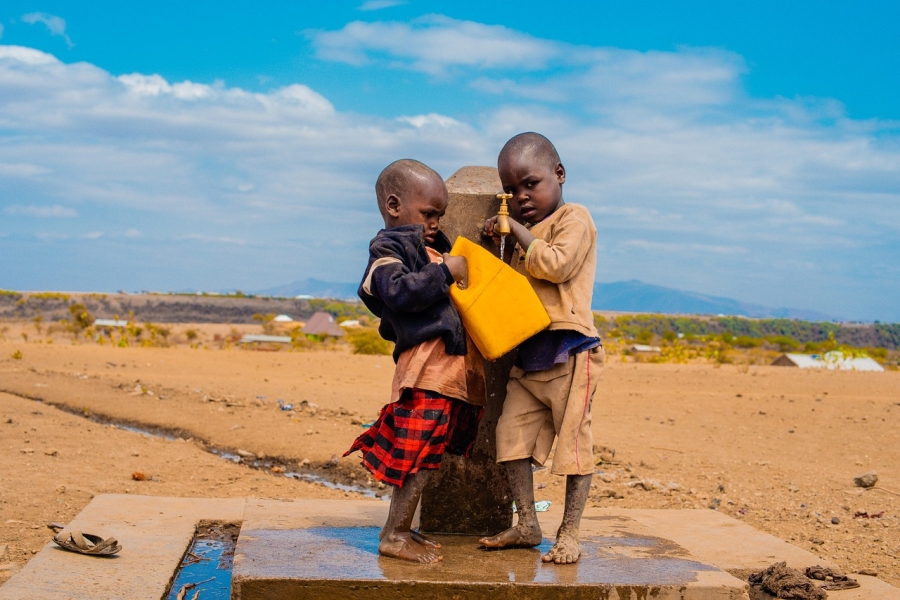
The World Health Organisation has published the Global Cholera Statistics of 2024, displaying a worrying situation of cholera-related deaths and spread of the virus among people and countries for the second consecutive year. With more than 6.000 deaths (50% more than 2023) and 12 countries with more than 10.000 cases, a tangible risk of humanitarian crisis exists.
Cholera spreads easily through faeces-contaminated water, in lack of water sanitation facilities. Furthermore, situations of crisis caused by conflicts or climate change hinder proper hygiene and sanitation and destroy health and water infrastructures.
Data testifies the increase in countries involved, reaching the number of 60 in 2024, surmounting the 44 reported in 2023, mostly in Middle East, Africa and Asia, areas of rising insecurity and conflicts.
Yemen has been experiencing the worst cholera outbreak. 2023 and 2024 data report a sharp increase in contamination and cholera-related deaths. The long-standing conflict, the lack of proper health infrastructure to prevent and cure the disease, and the inaccessibility of clean water are all severe factors. The collapse of the local economy impacts the hope for the future.
Confirming the worries of previous data, between 1 January and 17 August, deaths related to cholera were 4.738, while a total of 409.222 cases were reported during the same period. Such a trend of contamination is alarming for the interconnectedness among countries, many of which having unprepared sanitary and economic systems.
Democratic Republic of Congo, TChad, South Sudan and Sudan are experiencing the worst hit, after years of a seemingly calm situation. New vaccines, such as the oral cholera vaccine (OCV), Euvichol-S increase the already varied plethora of medical solutions. However, insufficient funds, unstable communications and collapsing medical centres make their distribution impossible and are not sufficient to cover all patients.
Joint efforts among States to coordinate on a common strategy are urgently needed. Access to clean water and systems for distribution, stronger healthcare facilities and vaccine distribution are essential. However, the cholera crisis is highlighting how unstable systems troubled by conflicts are experiencing surges of the virus.
WHO is essential to coordinate and aid the countries involved in the crisis, as well as to reduce the global risk of epidemics, fostering communication and strategies to alleviate the problem.
To read more, visit:
- https://reliefweb.int/report/world/cholera-kills-more-people-second-consecutive-year-while-prevention-and-treatment-available
- https://news.un.org/en/story/2024/12/1158491
- https://www.who.int/emergencies/disease-outbreak-news/item/2025-DON579


