


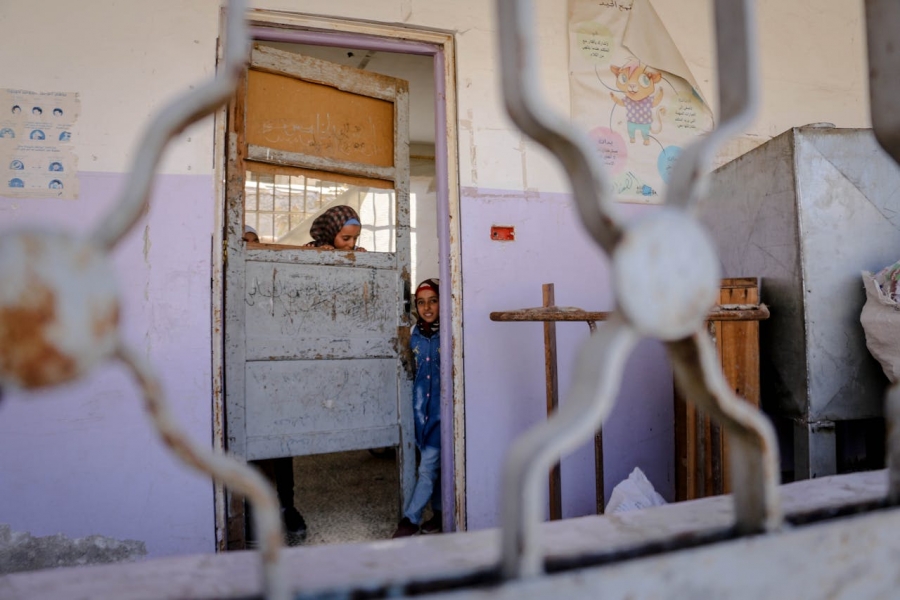
On January 13, 2025, the United States took a significant step toward safeguarding education worldwide by signing the Safe Schools Declaration (SSD). This declaration, initially developed by Argentina and Norway in 2015, is an inter-governmental agreement to protect individuals in schools and universities from the disastrous effects of armed conflict.
By signing the SSD, the United States joins 121 other nations in developing tangible measures designed to prevent the military employment of schools and universities by armed forces and non-state actors. These commitments are crucial for reducing the likelihood of attacks on educational institutions and mitigating the impact of such incidents when they do occur, fostering safer learning environments even during war.
Since April 2024, over 490 school buildings—approximately 87.7% of all schools in Gaza— have been destroyed or severely damaged due to ongoing conflict in the Middle East, disrupting the education of more than 625,000 children. Similarly, the Russo-Ukrainian war has caused damage to over 3,700 schools in Ukraine, with 440 completely destroyed as of late 2024, impacting millions of students and teachers. These attacks targeting educational institutions result in devastating consequences: tens of thousands of students and teachers are injured or killed each year, schools are reduced to ruins, and entire generations are deprived of the opportunity to learn and thrive in the transformative environment education provides.
The endorsement of the SSD by a global leader like the United States carries significant weight in addressing these dire realities. U.S. participation sends a powerful international message, reinforcing the principle that schools are civilian spaces deserving protection, even in war zones. By committing to the SSD, the United States strengthens its policies, such as maintaining educational institutions on its “no strike list,” while amplifying pressure on other nations and armed groups to adopt similar protections. Zama Neff, Executive Director for the Human Rights Watch’s children's rights division, argues that “given its influence, the U.S. move could help expand the group of countries putting their political muscle behind children and their education, encouraging allies to join” (US Commits to Protecting Education during Conflict). Over time, this collective effort could significantly reduce the frequency of school bombings, as increased accountability and international pressure render such actions unacceptable
- To read more, visit:
https://www.hrw.org/news/2025/01/16/us-commits-protecting-education-during-conflict - https://ssd.protectingeducation.org
- https://www.savethechildren.net/blog/education-under-attack-gaza-nearly-90-school-buildings-damaged-or-destroyed
- https://www.hrw.org/news/2023/11/09/ukraine-wars-toll-schools-childrens-future


