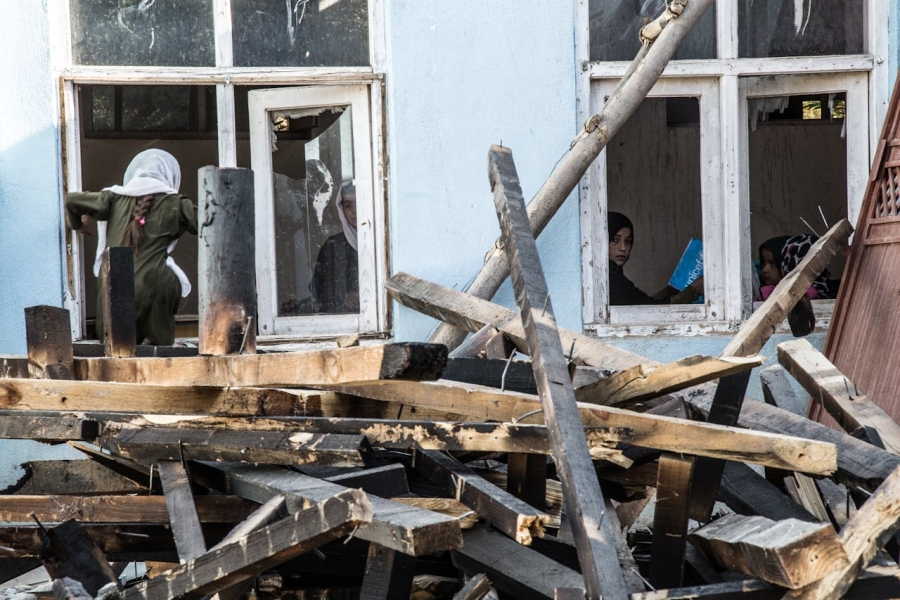
On the night of September 1, a powerful 6.0-magnitude earthquake struck eastern Afghanistan, devastating mountainous provinces such as Kunar, Nangarhar and Laghman. According to the United Nations, the quake initially caused more than 800 deaths and 2,000 injuries, but the potential impact could affect hundreds of thousands of people. Houses made of mud and wood collapsed on sleeping residents, suffocating entire families. Access to the affected areas was almost impossible due to landslides and roadblocks, forcing rescuers, including the Red Crescent, to walk for hours to reach isolated villages.
The death toll quickly rose to over 1,400, with more than 3,700 injured and around half a million people affected. Aftershocks continued to cut off communities already left without shelter, while fear forced many families to sleep outdoors. The World Health Organization issued an urgent appeal to strengthen medical interventions, while Taliban authorities organized more than 150 evacuation flights in just two days.
International aid has arrived, but remains insufficient. The United Kingdom, European Union, United Arab Emirates, India and China have pledged assistance and supplies, though avoiding direct coordination with the Taliban government, which lacks international recognition. Crisis management is therefore intertwined with a fragile geopolitical and humanitarian context: drastic funding cuts have shut down hundreds of health facilities, while millions of refugees forced to return from Iran and Pakistan find themselves in the very areas affected by the earthquake.
Rescue efforts are further complicated by restrictions on women. The shortage of female medical staff prevents many survivors from receiving proper care, worsening the psychological and health burden of a catastrophe that adds to economic, food and climate crises. For Afghanistan, the earthquake is not just a natural disaster: it is the symbol of a country on the verge of collapse, caught between disasters and isolation.
Sources:
- https://www.politico.com/news/2025/09/02/afghanistan-earthquake-rescue-00540460?utm
- https://www.reuters.com/world/asia-pacific/who-asks-taliban-lift-female-aid-worker-restrictions-following-earthquakes-2025-09-08/?utm
- https://news.un.org/en/story/2025/09/1165757


