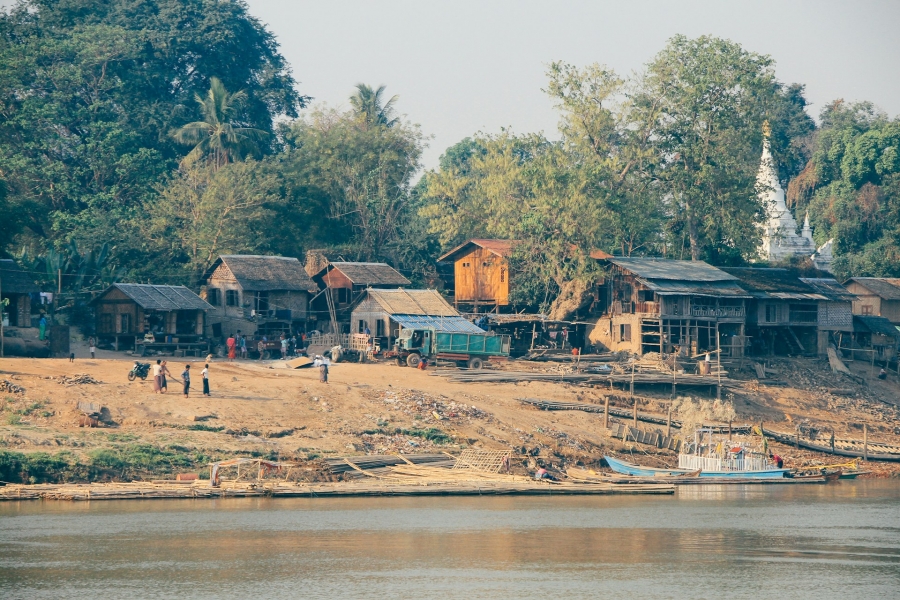
United Nations recently highlighted the risk of a deteriorating security situation in Rakhine state, western Myanmar, due to continued violence and displacement of Rohingya civilians. UN Spokesman Stéphane Dujarric warned about the danger of renewed escalation, stressing that Rohingya and other civilians are constantly subjected to forced recruitment, human rights violations, and other forms of abuse.
On 25 August 2017, a series of attacks by armed militants from the Arakan Army resulted in the death of several police officers. In response to the attacks, the military launched a violent crackdown on the majority-Muslim Rohingya population, forcing thousands of people to flee northern Rakhine State to neighbouring Bangladesh. Since then, over 700,000 Rohingya have crossed the border and are now living in refugee camps in Cox’s Bazar district.
Around 150,000 refugees have crossed the border in the last 18 months alone, representing the largest displacement in years. Babar Baloch, spokesperson for the UN refugee agency, UNHCR, has worked closely with local authorities in order to provide assistance to the refugees, but expressed concern over the rapidly growing needs. Bangladesh has managed to provide access to safety and asylum for civilians fleeing the conflict, but it currently hosts more than one million people in its refugee camps. The recent arrivals have further strained already limited resources, forcing many to rely on communal solidarity and share the few essential goods available.
Nobel prize winner and interim Bangladeshi leader Muhammad Yunus stressed that his country is struggling to continue supporting the Rohingya refugees and called on the international community for assistance. In August 2025, Yunus unveiled a seven-point plan aiming at securing the voluntary and safe return of the Rohingya to Myanmar. Speaking at a global conference in Cox’s Bazar marking eight years since the 2017 mass exodus, he urged the international community to develop a concrete roadmap that includes justice, dialogue, and regional cooperation. He warned that Bangladesh could no longer absorb further arrivals on its own without risking systemic collapse, calling for urgent donor support and intensified diplomatic engagement. His warning comes amid a worsening funding crisis that threatens to undermine humanitarian operations across the camps.
Both the UNHCR and UN Secretary-General António Guterres repeatedly called on donors to secure additional funding. At the current rate, with only 35% of the required $255 million funded, essential services including food assistance, healthcare, and livelihood opportunities risk being disrupted.
As funding shortages continue to worsen the humanitarian situation in Cox’s Bazar district, civilians in Rakhine State remain at risk from ongoing clashes between the Myanmar military and the Arakan Army, which have targeted homes, marketplaces, and civilian infrastructures.
The attention is now on the upcoming High-level Conference on Rohingya and other minorities, set to take place in New York on 30 September. With the meeting expected to highlight the urgency of a sustainable and lasting solution to the crisis, Mr. Dujarric called on all stakeholders to push for the end of conflict and work on the voluntary return of displaced individuals.
To read more, please visit:
- https://news.un.org/en/story/2025/08/1165714
- https://news.un.org/en/story/2025/07/1165369
- https://www.aljazeera.com/news/2025/8/25/bangladeshi-leader-demands-justice-for-rohingya-safe-return-to-myanmar


