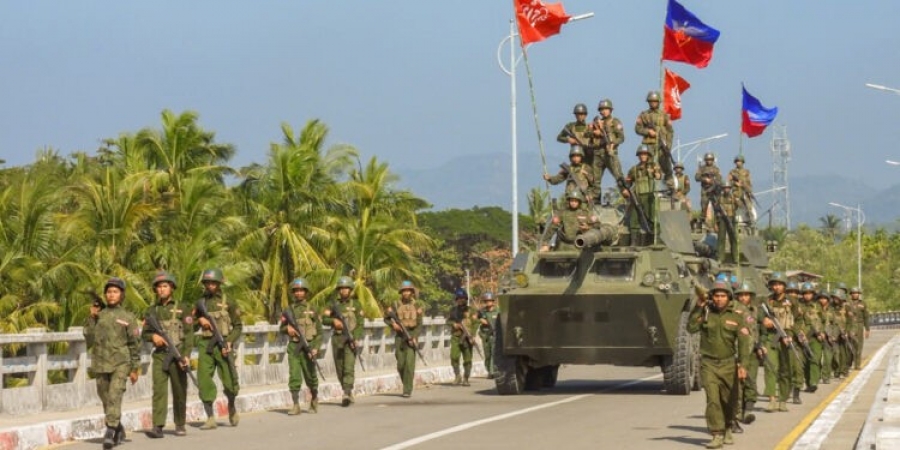
In the central part of the Rakhine State of Myanmar, a deadly combination of conflict, blockades, and funding cuts has driven the number of families unable to meet basic food needs to 57%, a 14% increase from December 2024. The situation is expected to be much worse in northern Rakhine due to active conflict and problems with access.
Currently, Rakhine State is at a pivotal moment. The rebel group Arakan Army’s (AA) fight against Myanmar’s military government unfolds against a growing humanitarian crisis. The Myanmar military’s blockade of supplies to Rakhine is worsening the hunger crisis, and the UN estimates a risk of starvation that threatens more than two million people. Thousands of civilians are hemmed in to Sittwe, which is accessible only by air and sea. Local residents have resorted to desperate measures, including begging, sex work, daytime thefts, and even suicide. Troops raid homes and check residents for tattoos as signs of AA support.
According to the World Food Programme’s (WFP) Community Feedback Mechanism, there has been an alarming rise in distress signals. Families in Myanmar are being forced to take increasingly desperate measures, including rising debt, domestic violence, social tensions, school drop-outs, begging, and human trafficking. Cut off by conflict, stripped of livelihoods, and with no humanitarian safety net, citizens find themselves in a vicious cycle. Prolonged conflict, soaring food prices, and a significant decrease in humanitarian funding are driving the hunger crisis to new levels. In April 2025, WFP cut lifesaving support to over one million people across Myanmar due to funding cuts.
There is also a rising civilian toll as a direct consequence of conflict. As the AA continues to advance across Rakhine, the military government has turned to air strikes, a tactic that has been used nationwide since the 2021 seizure of power. Air raids killed 402 civilians between late 2023 and mid-2025, including 96 children. In addition, artillery, landmines, and extrajudicial killings have led to 26 civilian deaths. Both the AA and the Myanmar military have implemented conscription to bolster their forces.
Ethnic violence has also increased, with more than a million Rohingya Muslims in refugee camps along the Myanmar-Bangladesh border. The UN has reported 150,000 new arrivals over the past 18 months, and reports have alleged AA abuses against Rohingya civilians that remain in Rakhine, including a massacre of 600 people in 2024.
by Megan Xing


