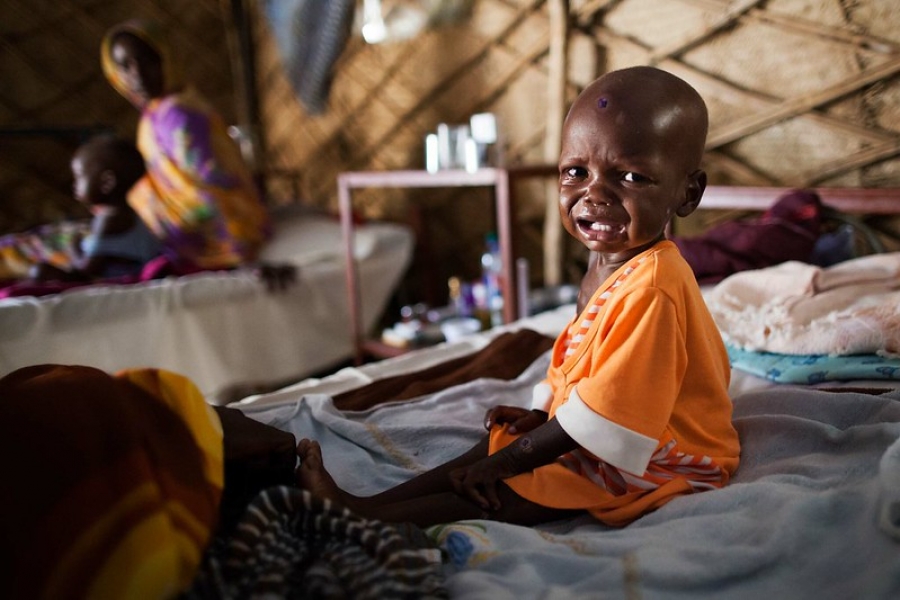
The ongoing conflict in Sudan has resulted in a significant humanitarian crisis, with millions of individuals having been forcibly displaced and 30.4 million in urgent need of humanitarian assistance, including 15.6 million children.
According to the United Nations International Children's Emergency Fund (UNICEF), it is estimated that 3.2 million children under the age of five will be confronted with acute malnutrition this year, and 770,00 are malnourished. The Food and Agriculture Organization (FAO) has stated that the country is experiencing widespread food insecurity, with at least 50% of the population affected.
The present situation is the result of the conflict, which has had a deleterious effect on the majority of agricultural land, thus reducing the primary resource and, concomitantly, the potential income of 80% of the population. People displacement n is a contributing factor to this issue, in addition to the effects of climate change. Current forecasts indicate that precipitation levels are expected to fall below average this year. This has led to five areas experiencing famine conditions, including Darfur, Khartoum and Kordofan. In addition, due to the unavailability of adequate vaccination programmes for livestock, these animals are susceptible to health concerns, which in turn can lead to a decline in the availability of alternative sustenance sources for rural households. The ongoing conflict has a significant impact on market access, with many families facing challenges in acquiring essential goods and services. This has impacted on the availability of fertilisers and food, which are crucial for food security and nutrition. It is evident that this obstruction also pertains to the provision of medical assistance, as evidenced by the cases of obstruction in the Darfur region.
The dire conditions of Sudanese civilians are a consequence of the conflict initiated on 15 April 2023. On the day in question, the Sudanese Armed Forces (SAF), the country's military, under the command of the dictator General Abdel Fattah al-Burhan, and the Rapid Support Forces (RSF), a paramilitary group that assisted the leader of the SAF in gaining power, initiated a dispute due to their differing opinions on how to govern the nation. This discordance is particularly noteworthy given their previous collaboration in 2019 to overthrow the long-serving dictator Omar al-Bashir, who had been in power for 30 years.
As the situation continues to deteriorate, FAO affirms that it “is ready to deliver time-sensitive support to help farmers plant on time”. However, more funding is needed to ensure the distribution of seeds.


