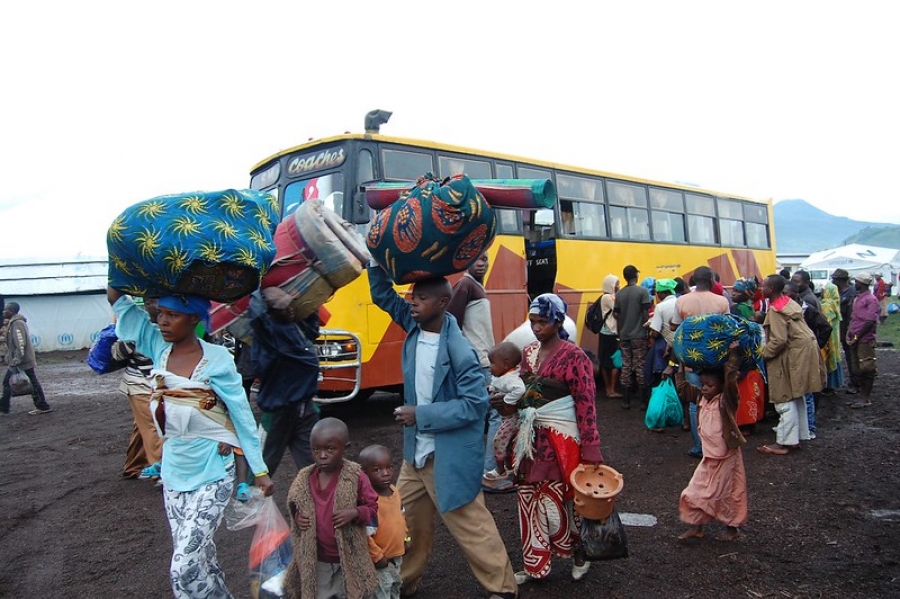
The ongoing conflict in the Democratic Republic of Congo (DRC) has had a considerable impact on neighboring countries, including Uganda, and their populations. The United Nations reports that during the month of March, at least 600 individuals from the DRC each day sought refuge in Uganda, with estimations of approximately 600,000 individuals being hosted.
The United Nations High Commissioner for Refugees (UNHCR) has expressed concerns that Uganda is on the verge of being overwhelmed, as its resources are already being allocated to assist the 70,000 Sudanese refugees who have fled the ongoing civil conflict in Sudan. The UNHCR affirms that women and children, who are often malnourished and infected with malaria, travel together, while men are more likely to travel separately to "avoid being forcibly recruited by armed groups".
The considerable increase in passenger numbers has had a significant impact on transit centers, with Nyakabande being a notable example. This has resulted in overcrowding and a shortage of bathing facilities which has the potential to exacerbate the contraction and propagation of diseases, particularly given the pre-existing health concerns of the population. For example, the UNHCR has reported that nine children under the age of five have died from malnutrition-related anemia in the Nyakabande and Matanda transit centres.
Since 1996, the DRC has been experiencing a civil war between Hutu extremists and the Tutsi minority. The origins can be traced back to the Rwandan genocide of 1994, when almost 2 million Hutus fled to the DRC, heightening tensions with the Tutsi minority. However, the conflict escalated again in early 2025 when the M23 rebel group, formed in 2012, seized Goma and other key geographical points in its uprising against the government and its army.
The funding cuts following the decision of President Trump has been impacting all the international organizations and consequently their opportunities to bring actual help in their respective areas.
In the case of UNHCR, the agency had to choose between vital aids and its other protection activities, such as legal aid for refugees and other health facilities that had to be closed. The agency affirms that 12.8 million displaced people could be left without life-saving health interventions in 2025 and especially DRC, where the health system is under stress, could see the effects of the cuts, leaving over 520,000 refugees at risk.


