The report was drafted by the International Committee of the Red Cross (ICRC) with the support of the Myanmar Red Cross Society (MRCS), Partner National Societies, and community based civil societies. The ICRC is a neutral organization whose aim is the protection of the humanitarian rights of people, particularly those who are victims of conflict or violence of any kind. On the other hand, originally founded as a branch of the Indian Red Cross Society, the Myanmar Red Cross Society (MRCS) was granted national status in 1939 and admitted to the International Federation of Red Cross and Red Crescent Societies in 1946. Today, it plays a vital role in providing relief and improving the lives of the people of Myanmar. This report describes the situation in Myanmar over the past year. It shows that the humanitarian situation continues to be difficult as living conditions, such as difficulties in accessing health care or adequate food and water, forcing people to flee the country. Indeed, humanitarian efforts are complicated by the fact that security restrictions are being tightened, increasing the risks for aid workers.
Origins of the conflict
As Council on Foreign Relations reports, the situation is the result of decades of repressive military rule since 2011, with the military, the Tatmadaw, started abusing the population through rape, forced labour and torture. Human rights monitors have also reported the use of child soldiers. The military, led by Senior General Min Aung Hlaing, staged a coup in February 2021 after losing the national elections and now faces the opposition from ethnic armed organizations and civilian militias. Since the start of the conflict, the military has killed at least 1,500 people and is destroying villages believed to support the opposition. Journalists and aid workers are also not safe and face the possibility of arrest. The roots of the conflict are ethnic, as Myanmar is a very diverse country with two-thirds of the population being ethnic Burmans. They are considered privileged and receive benefits compared to other minority groups. This discrimination dates back to British colonial rule.
Methodology
The report's methodology is based on data collected in the field. It was collected directly by the ICRC through its field operations, which tracked the number of people who received its assistance, from the reception of goods and health care to those who participated in training programmes. The data collected was supplemented by the other partners, in particular the MRCS, to ensure a comprehensive and localized understanding of the humanitarian situation. The report is divided into sections that categorize the data by geographical region, with key highlights relating to operations, such as the one focused on the operations in Shan. Here, in just three months the teams were able to provide essential items and food rations to 5,434 people. The other sections are divided into thematic areas, such as access to water. The report also focuses on the impact of aid, providing a qualitative insight into the impact of the conflict on civilians.
Key findings
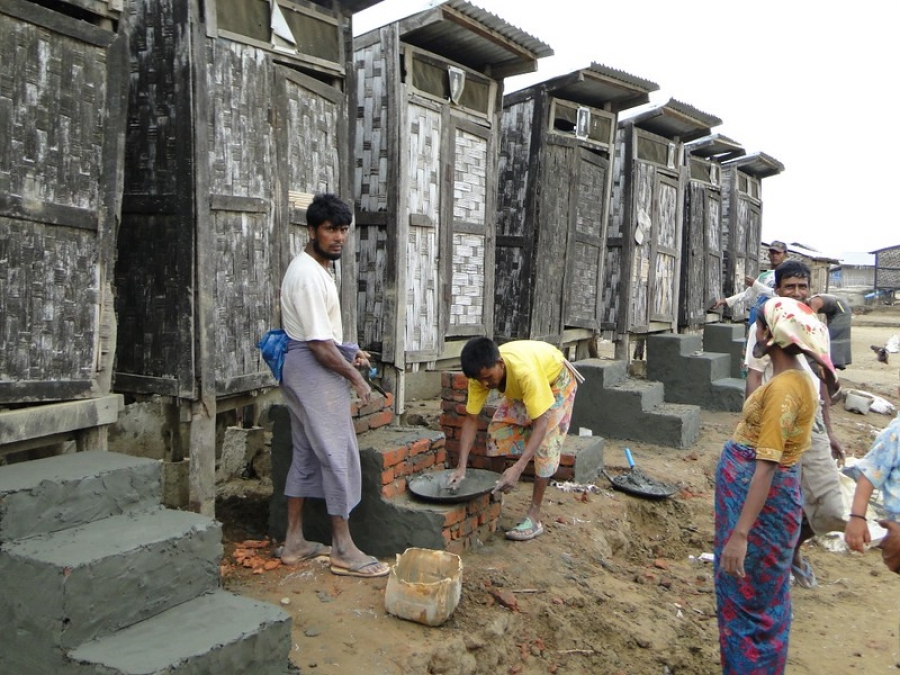
According to the report major findings the impact of conflict is severe and that civilians need to fulfill basic necessities such as food and water, as well as knowledge of the risks associated with explosive ordnance (EO) and first aid. According to the report, through the emergency relief operations of the ICRC, 120,430 people received seeds and all the agricultural essentials to start growing crops. 173,336 people obtained improved access to water, sanitation and shelter, specifically in conflict-affected areas and a total of 41,480 people received food rations and 49,621 households received basic non-food items. In terms of efforts to rehabilitate EO victims and people with disabilities, 4,880 people were treated and provided with physical rehabilitation by the teams, providing a total of 22,775 physiotherapy sessions and 1,309 prostheses. Lastly, 54 health facilities received support in the form of medicines and equipment. ICRC teams also had a major impact in helping families find their loved ones. The Family Links programme enabled 419 missing individuals to be reunited with their families. The teams helped 5,162 people released from detention to return home. Finally, the teams were able to educate 69,871 people about the risks associated with the EO and 616 people about International Humanitarian Law (IHL).
Conclusions
As the nature of the conflict in Myanmar changes, there is a renewed need to raise awareness of international humanitarian law and to focus on what communities actually need. This is why the ICRC has been talking directly to the people concerned during its operations. In Kachin State, for example, it provided kitchen sets in response to requests from families, and in Yangon it organized an exhibition on IHL to highlight the importance of States' compliance with it.
However successful the ICRC's humanitarian efforts, the conflict must end so that civilians can return to a normal life.


