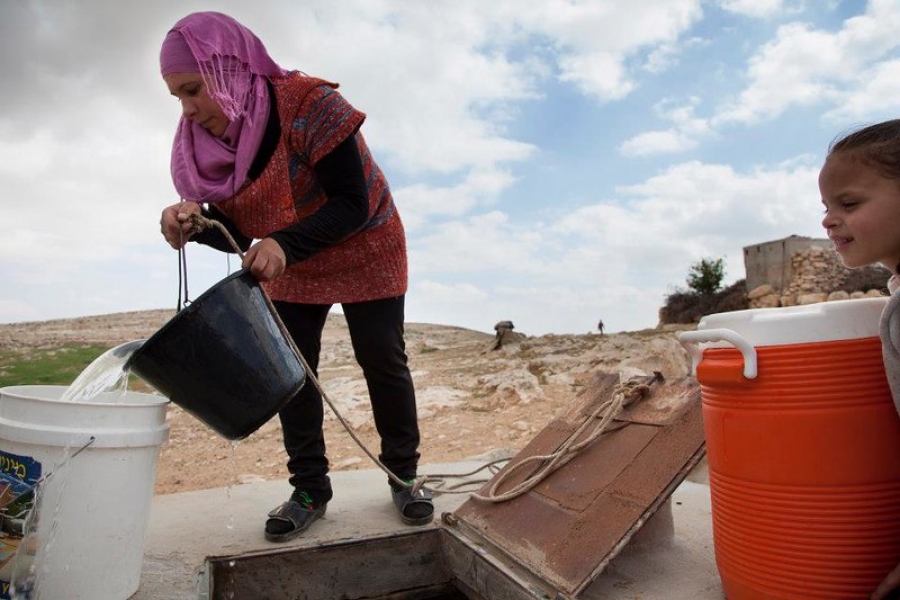
Israel's continuous attacks on Gaza have had an enormous impact on civilian survival.
In fact, since the first attack, 1,675 kilometers of water and sanitation facilities have been destroyed, making it almost impossible for civilians to access water. The most affected provinces are North Gaza and Rafah. Following the ceasefire, Oxfam found that more than 80% of the water and sanitation infrastructure in Gaza had been destroyed. In Rafah 90% of water wells and reservoirs are now damaged. 35 only are still in functioning and they are not enough to serve civilians' needs.
Another consequence is the deterioration of hygiene conditions, as destroyed networks increase the possibility of spreading diseases, especially in overcrowded places such as the refugee camps. 46,000 people, many of them children, are known to have died from diarrhoea and respiratory infections. To make matters worse, cesspits are being built near the tents in the Gaza refugee camps, allowing at least 130,000 cubic metres of untreated sewage to flow into the Mediterranean. Gaza's only aquifer is also being contaminated, increasing the risk for diseases for those who live there.
Clémence Lagouardat, Oxfam's Humanitarian Coordinator in Gaza, said that the ceasefire must hold and that the international community must provide aid and funding to restore the Palestinian water system to end the humanitarian crisis and give the Palestinians a chance to move towards peace.


