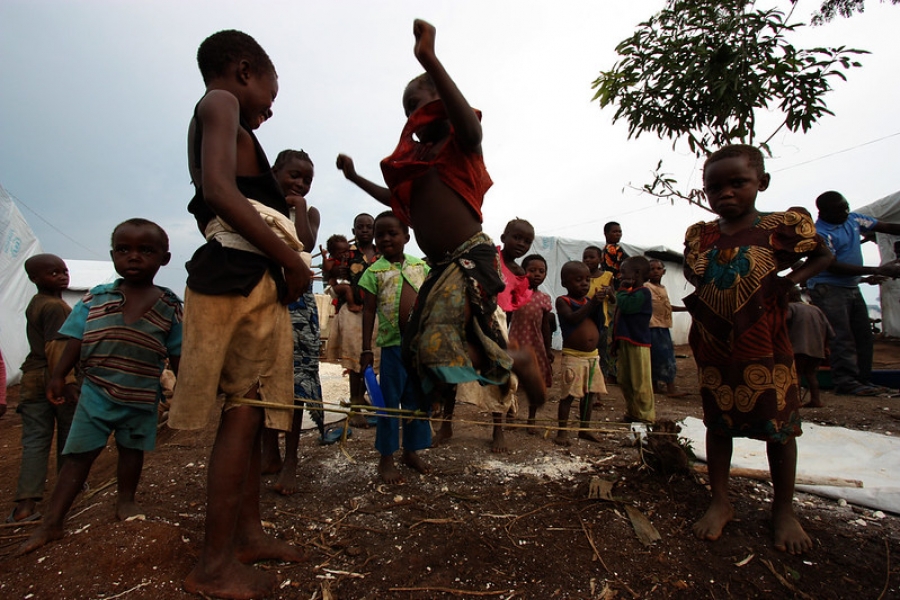
As the conflict in the Democratic Republic of Congo (DRC) keeps escalating, the internal situation for the civilians is worsening. Infrastructures such as water supply, shelter and basic health services are difficult to find, especially in the internal camps for displaced people. This situation influences numerous people to flee from the conflict and seek refuge in neighboring countries, such as Burundi.
The UNHCR is reporting that there are between 10,000 and 15,000 people that have crossed the border in the last few days. Most of them come from the South Kivu province due to a recent clash between the conflict parties. The Burundian cities where they go are mostly Gatumba, right past the border, and the nearest largest city, Bujumbura. Another route taken is through the Rusizi River near Rugombo, but it is deadlier as many drown. National authorities are working with the UNHCR teams to screen the refugees to give the aid they immediately need and to relocate them effectively in transit centers.
The situation in DRC is due to the clashes between the M23 rebel group and the National Army. Moreover, the group has gained control of crucial geographical points such as Goma, the largest city in eastern DRC, in the North of Kivu. Geographical reasons are behind this attack, as Goma is the crucial point for resources and transportation. Another city that has been taken control off is Bukavu, in the South Kivu region.
The origin of conflict can be traced back to the 1994 Rwandan Genocide, during which nearly two million Hutu refugees fled to DRC, settling mostly in the Kivu provinces. Among those, there were perpetrators of the genocide, leading to increase ethnic tensions, particularly with the Tutsi communities in the region. The M23 emerged in 2012 as an ethnic Tutsis armed group and it accused the DRC government of failing to honor the 2009 peace agreement, which aimed, among other things, at integrating Tutsi fighters into the national army. However, this is just one of the reasons of the conflict, as there is also the aim of gaining control of the mineral resources of the area


