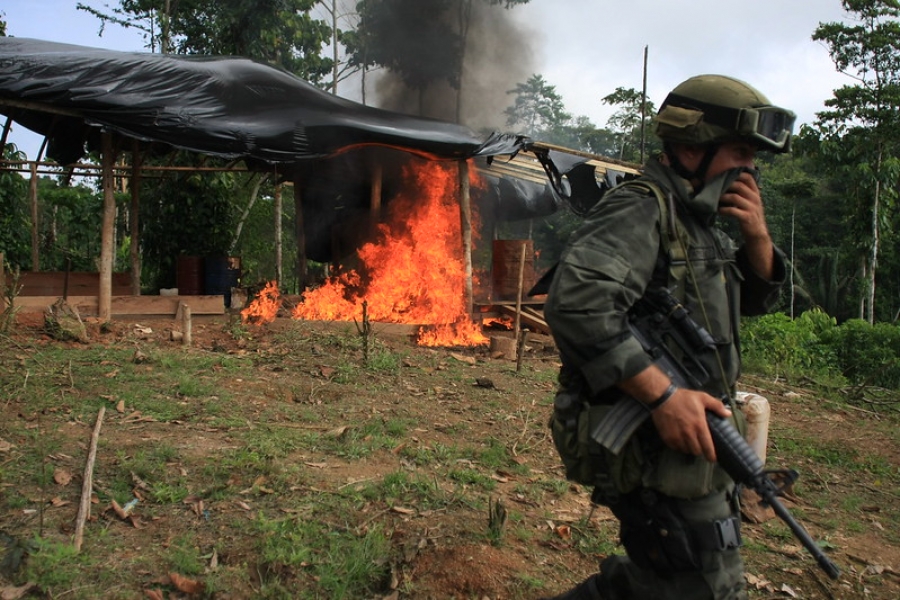
During the third week of January, in the Catatumbo region in Colombia, strategic for drug production and trafficking, many civilians were killed as a result of the fight between the National Liberation Army (ELN in Spanish) and General Staff of Blocks and Front (EMBF in Spanish), an armed group that comes from the Revolutionary Armed Forces of Colombia – People’s Army (FARC-EP in Spanish). Many of those killed seemed to be targeted individually because they participated in the previous conflict or in the related peace accords. The other effect of the conflict is that many civilians are now forced to leave their homes. Carlos Ruiz Massieu, Special Representative of the Secretary-General for Colombia affirmed that the local teams from the UN Verification Mission in Colombia, whose teams are evacuating the individuals more at risk, are cooperating with other UN agencies that are working to help the displaced, who are more than 32,000, as CNN reports.
The UN reports that the previous conflict between the Government of Colombia and the former Revolutionary Armed Forces of Colombia (FACR-EP) guerrilla group lasted for 50 years, with a peak in violence between 1995 and 2004. Among the 450,664 victims of the conflict 89% of the victims belonged to ethnic groups. Today’s crisis is the direct result of the bad implementation of the previous conflict’s peace agreement. The guerrilla groups have been involved in drug trafficking and other criminal activities since the 60s-70s, says Elizabeth Dickinson, Colombia senior analyst at the International Crisis Group.
Many of the displaced reached the neighboring country, Venezuela, trying to seek refuge in the city of Cúcuta. The mayor of the city, Jorge Acevedo stated that the city is open to helping all those in need, with solidarity and respect, because of the emergency of the situation. On the other hand, the warrants for the 31 ELN members that were involved in peace accords negotiations were reactivated by the Colombia’s Attorney General’s Office. The UN agencies launched the 2025 Humanitarian Response Plan for Community Priorities to face the humanitarian situation. According to the International, on February 9th, the country's president Gustavo Petro has asked ministers and senior government officials to step down, precisely because of the lack of speed in implementing the response to social reforms but it is necessary to make important changes in the country to improve the situation.
To read more, please visit:
- Colombia: Catatumbo killings highlight fragility of peace process | UN News
- Eight Years of Building Peace in Colombia | Department of Political and Peacebuilding Affairs
- Special Representative of the Secretary-General for Colombia and Head of the United Nations Verification Mission in Colombia | United Nations Secretary-General
- Violence in Colombian drug trafficking region displaces more than 32,000 people | CNN
- Colombia: Plan de Respuesta a Prioridades Comunitarias, enero 2025 - Colombia | ReliefWeb
- Un governo in crisi - Internazionale
- Colombia: Protect civilians in Catatumbo - Amnesty International


