The report analysed was produced by the Integrated Food Security Phase Classification (IPC), a global initiative developed by the Food and Agriculture Organization of the United Nations (FAO) together with other international organisations, aimed at assessing food insecurity and malnutrition in crisis contexts. The IPC provides independent and standardised analyses, widely recognised by the international community, to measure the impact of crises on civilian populations, particularly in situations of armed conflict. The Special Brief on the Gaza Strip, covering the period from October 2025 to April 2026, was prepared by experts in food security, nutrition and public health, with contributions from partners operating on the ground, with the aim of offering a rigorous and comparable overview of civilian living conditions and informing humanitarian and policy decision-making.
The methodology adopted by the IPC combines quantitative and qualitative data drawn from household surveys, market monitoring, health and nutrition information, and assessments of access to humanitarian assistance. The analysis focuses on the direct and indirect effects of the armed conflict on the civilian population of the Gaza Strip, particularly concerning access to food, loss of livelihoods and the deterioration of health conditions, intending to assess the extent to which the intensity and duration of the conflict have undermined households’ ability to meet minimum food needs. The report highlights that, compared with the previous IPC analysis of August 2025, the food security situation in the Gaza Strip has partially improved, mainly due to increased humanitarian and commercial deliveries following a reduction in hostilities. However, these gains remain contingent on unpredictable and intermittent humanitarian access, which continues to fall below pre-crisis levels.
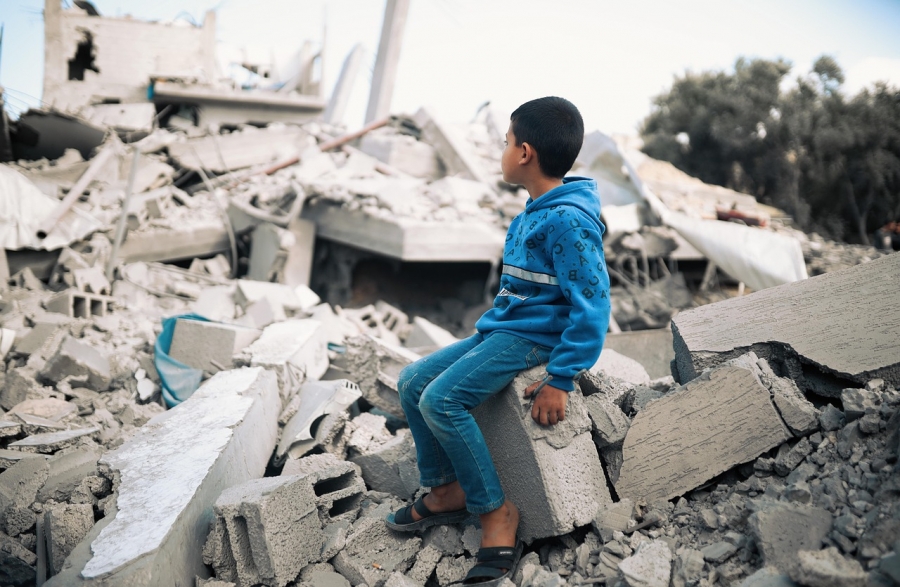
Nevertheless, the situation remains critical: the entire Gaza Strip is classified in Emergency (IPC Phase 4) until mid-April 2026, while no area is currently classified in Famine (IPC Phase 5). Between 16 October and 30 November 2025, approximately 1.6 million people faced high levels of acute food insecurity (IPC Phase 3 or above), including around 104,000 people in Catastrophe (IPC Phase 5) and more than half a million in Emergency (IPC Phase 4). The situation is particularly severe in the governorates of North Gaza, Khan Younis, Deir al-Balah and Gaza, where between 75 and 85 per cent of the population is affected. In each governorate, around 5 per cent of the population remains in Catastrophe, facing extreme shortages of food and or other essential needs. After more than two years of war, many households have exhausted their savings and assets. The ceasefire of 10 October has only partially reduced the intensity of the conflict: hostilities continue, while severe constraints on humanitarian and agricultural access, extensive damage to infrastructure and high levels of displacement persist. Over 80 per cent of structures and approximately 77 per cent of the road network have been damaged. Following the ceasefire, significant population movements have occurred, particularly from the south towards the north, further exacerbating overcrowding, the deterioration of health conditions and protection risks. With the onset of winter, worsening shelter conditions are expected to further increase population vulnerability and the overall humanitarian impact of the crisis.
According to IPC projections for the period 16 October 2025 to 15 October 2026, an estimated 101,000 children aged between 6 months and 5 years will be affected by acute malnutrition, including 31,000 cases of severe acute malnutrition (SAM) and 70,000 cases of moderate acute malnutrition (MAM). In addition, 37,000 cases of acute malnutrition among pregnant and breastfeeding women are projected, underscoring the deep and lasting impact of the crisis on the most vulnerable groups. The destruction of infrastructure, restrictions on the movement of people and goods, and the collapse of economic activities continue to severely limit access to food.
Between 1 December 2025 and 15 April 2026, approximately 1.6 million people are expected to remain in Crisis or worse conditions (IPC Phase 3 or above), including 571,000 people in Emergency and around 1,900 in Catastrophe, indicating a reduction in the most extreme forms of deprivation but not a resolution of the crisis. Diets remain severely inadequate: although some more nutritious foods are available in markets, most families cannot afford them. Serious deficiencies in hygiene and sanitation and damaged sewage systems continue to drive the spread of infections, particularly among children, while the arrival of winter further heightens the risk of disease outbreaks and epidemics. Under a worst-case scenario, characterised by a resumption of hostilities and a halt in humanitarian assistance, the entire Gaza Strip would be at risk of famine through mid-April 2026.
Overall, the IPC Special Brief confirms that the conflict in the Gaza Strip continues to have devastating consequences for the civilian population, particularly in terms of food security and nutrition. The improvements observed in recent months remain linked to a temporary increase in assistance and do not represent a structural change. The report strongly emphasises the need to ensure sustained and unhindered humanitarian access, to strengthen food and nutrition interventions, and to prioritise the protection of the most vulnerable groups. In the absence of a durable ceasefire and sustained international engagement, food insecurity risks becoming a chronic condition, with profound and long-term consequences for the health, dignity and resilience of Gaza’s civilian population.


