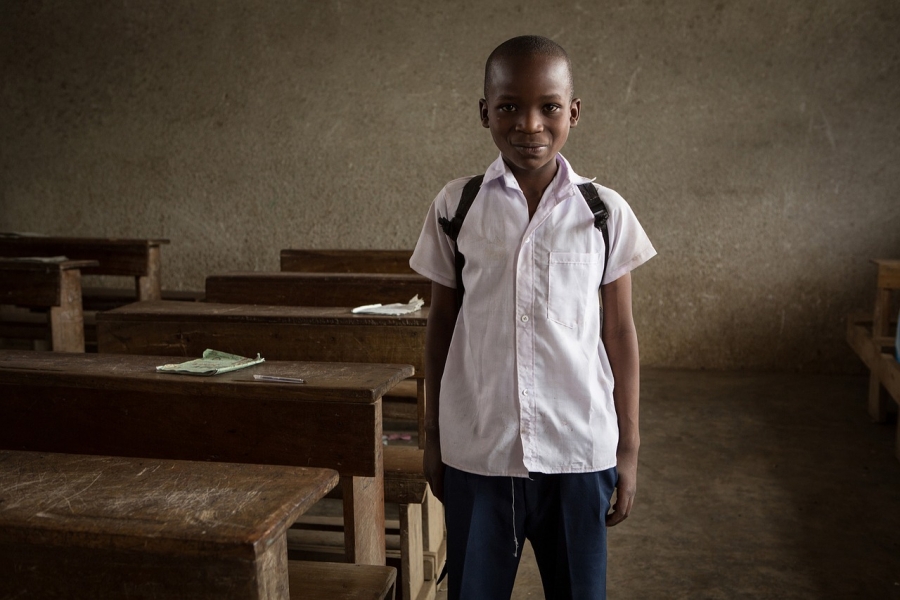
According to a new UNICEF analysis, by 2026 funding for education could decrease by 3.2 billion dollars, a 24% drop compared to 2023.
Such a drastic contraction risks leaving an additional 6 million children out of school, raising the total number of children excluded from education from 272 to 278 million — the equivalent of emptying every primary school in Germany and Italy combined.
The consequences would be particularly severe in the most fragile regions of the world. In West and Central Africa, nearly 1.9 million children could lose access to schooling, while in the Middle East and North Africa the projected increase is 1.4 million out-of-school children. Already vulnerable countries such as Côte d’Ivoire and Mali risk a 4% drop in enrolment, which would mean hundreds of thousands of students deprived of education.
Primary education, which is crucial for the development of basic skills, will take the hardest hit, with funding expected to fall by about one third. This will further exacerbate the learning crisis and, according to estimates, could translate into 164 billion dollars in lost future earnings for affected children. In humanitarian settings, the impact will not only be educational: the closure of learning centres would deprive millions of children of a protective environment, increasing the risks of exploitation, child labour, and trafficking.
Other essential school-related services, such as school feeding programmes — which in many cases represent the only nutritious meal of the day — risk being cut by more than 50%. Support for girls’ education, already fragile, will also see significant reductions, with direct consequences on gender equality and the opportunities for millions of girls to achieve emancipation.
But it is not only about those excluded from classrooms: even children who remain in school will experience declining education quality. Weakened school systems will lack the resources to train teachers, monitor learning outcomes, or design evidence-based policies. Estimates suggest that around 290 million students could see the quality of their education deteriorate.
To prevent this scenario, UNICEF is calling on donors to rebalance aid by allocating at least 50% of funds to the least developed countries, protect funding in humanitarian contexts and recognize education as a life-saving intervention, focus on foundational learning, simplify global financing mechanisms as envisaged in the UN80 Initiative, and expand innovative financing systems without replacing core contributions already in place.
As UNICEF Executive Director Catherine Russell has reminded, “every dollar cut from education is not just a budgetary decision, it’s a child’s future hanging in the balance.” Investing in education is not an expense but a commitment to stability, development, and human dignity. If the international community does not act immediately, millions of dreams and opportunities will be lost, and the universal right to education risks becoming a broken promise.
To read more, please visit:


