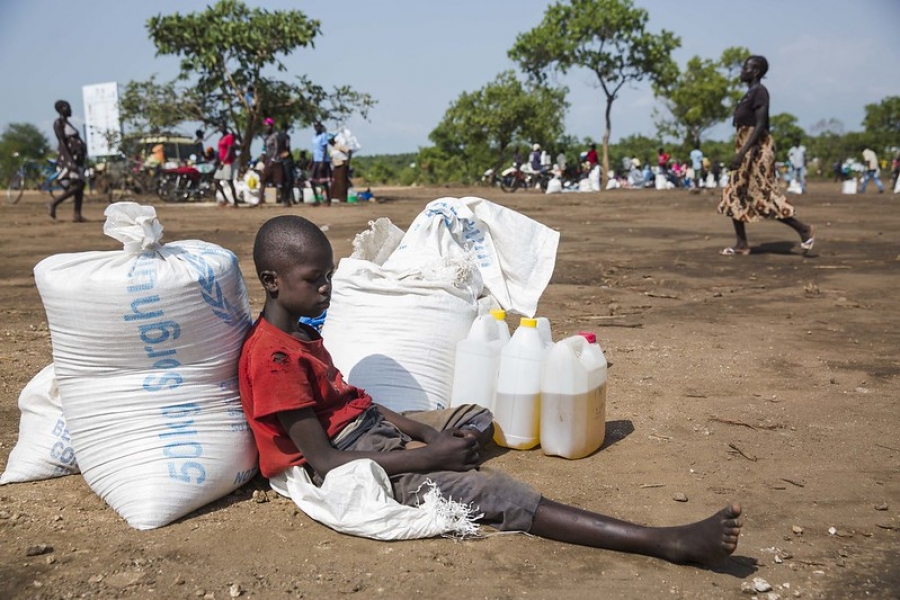
The report, entitled 'The Sudan Crisis: How Over a Year of Violence and Humanitarian Access Restrictions Have Produced Famine Conditions', was published in January 2025 by Insecurity Insight, a non-profit organization focusing on the impact of conflict on humanitarian activities and aid.
This research and analysis paper is part of a series that focuses on understanding and demonstrating the link between conflict and hunger. It reports on "conflict-related incidents of food-related violence in Sudan between 15 April 2023 and 30 November 2024", including damage to food production by the use of explosive weapons (see article). It also highlights that there are other factors contributing to food insecurity, such as blockades to food supply chains and humanitarian convoys. These restrictions, combined with military attacks, have led to famine conditions in all regions of Sudan since July 2024.
Methodology
The report is based on Food Insecurity and Violent Conflict (FIVC)-Sudan dataset, which combines open sources such as Armed Conflict Location & Event Data (ACLED) project data and Insecurity Insight's Security in Numbers Database (SiND), and contributions from partners.
The categorisation of incidents taken into account is based on the objects and infrastructure that have been directly affected, as well as the modus operandi employed in the commission of the attacks. This classification does not include either blockades or access restrictions. Furthermore, it should be noted that casualties among individuals engaged in the country's food supply system have been excluded from this categorisation. This ensures that the collection of information remains cost-effective while concomitantly mitigating the risks to those engaged in the research process.
However, the report is limited by communication barriers in this conflict zone, including large-scale telecommunications blackouts. As a result, only some of the incidents have been taken into consideration, thus providing a partial picture of the impact of food-related violence on food security in the country.
Key findings
The report shows the high incidence of violence in Sudanese markets, with at least 236 incidents recorded. In Khartoum State, 64 attacks were carried out by aircraft or drones, most of them by the Sudan Armed Forces (SAF), while 40 incidents of shelling involved both SAF and Rapid Support Forces (RSF). On the other hand, Darfur region has been the most targeted, with markets looted, notched and used for abductions.
In Gezira state, the RSF has been engaged in large-scale illegal harvesting since December 2023, when the military group took control of the capital, Wad Medani. Tractors and fertilizer were stolen from the irrigation system, a State-run system whose headquarters are in the Gezira region. Those farm resources are crucial for the region, as it has numerous warehouses that store food. In the Darfur and Kordofan regions, RSF and other militias are reported to have taken livestock on 85 occasions.
The impact on humanitarian workers has also been severe, with 62 of the 67 killed being local. Restrictions on aid deliveries and the collapse of health services have exacerbated food insecurity. The most vulnerable groups are pregnant women and children.
Recommendations
The reports recommend urgent international intervention to address the humanitarian crisis in Sudan.
Firstly, it is necessary to improve humanitarian access to aid. This could be done by pressuring both SAF and RSF to comply with the International Humanitarian Law obligation in the Jeddah Declaration of Commitment to Protect the Civilians of Sudan (May 2023), to lift blockades and stop obstruction. This should include a focus on establishing humanitarian evacuation corridors for civilians in blocaked areas.
Secondly, Insecurity Inisght recommends to set up uninterrupted telecommunications services and internet access in Sudan.
Third, it’s crucial to adopt stringent measures to protect markets, food supplies and humanitarian personnel from targeted attacks.
Fourth, IHL duty bearers are recommended to encourage the incorporation of the “Practical Measures to Prevent and Mitigate Conflict-Induced Food Insecurity document into the training and practice of conflict parties in Sudan”.
Without immediate action the food crisis in Sudan will continue to escalate, exacerbating the suffering of millions of civilians.
To read more, please visit:
- Home - Insecurity Insight
- The-Sudan-Crisis-How-Over-a-Year-of-Violence-and-Humanitarian-Access-Restrictions-Have-Produced-Famine-Conditions-January-2025.pdf
- https://aoav.org.uk/2025/global-civilian-casualties-from-explosive-weapons-surge-in-2024-by-67-hitting-record-highs/
- ACLED (Armed Conflict Location and Event Data)
- https://www.state.gov/jeddah-declaration-of-commitment-to-protect-the-civilians-of-sudan/
- https://www.interaction.org/wp-content/uploads/2024/05/Practical-Measures-English.pdf


