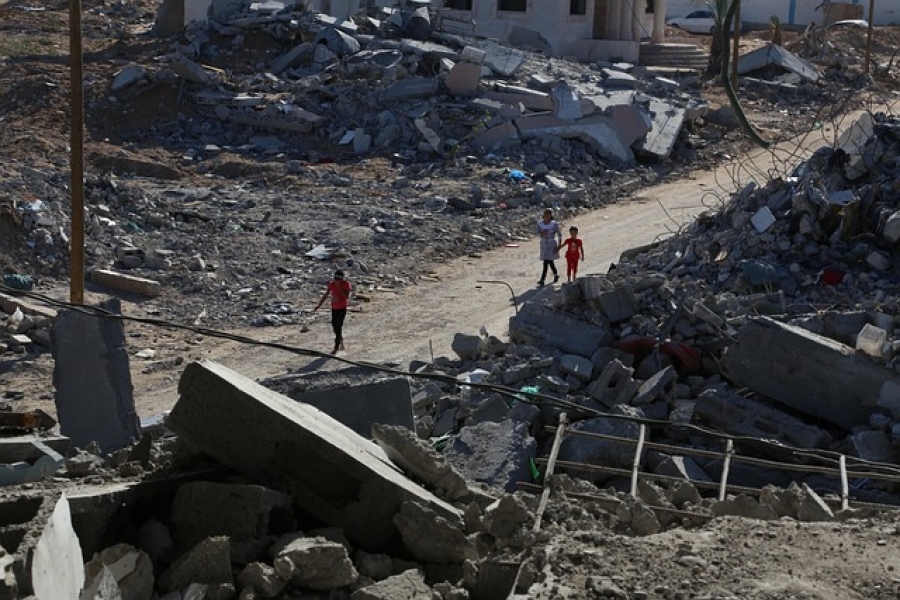
Armed violence does not harm everyone in the same way, and different weapons leave different marks on women and children. Explosive weapons in populated areas hit children hardest: according to UNICEF, almost 70% of child casualties in 2025 were caused by explosive weapons, which also destroy the schools, hospitals and water systems that children and mothers depend on. Landmines and explosive remnants keep killing and maiming children long after the fighting ends. Small arms mostly kill men and boys directly, but women and girls live with the consequences: widowhood, lost income, and sexual violence, since guns are also used to threaten and rape; the UN links arms proliferation to sexual violence.
International humanitarian law protects women and children, the Convention on the Rights of the Child, Security Council resolutions 1325 and 1612 and the Rome Statute add specific protection for children and women. The Arms Trade Treaty also requires exporting states to assess the risk of serious gender-based violence. However, the figures show that they still pay the higher price. In 2025 the UN recorded over 37,000 civilian deaths in 20 conflicts, with women about 18% and children about 20% of recorded casualties. The UN verified 38,558 grave violations against 24,174 children, one third of them girls, including 6,266 killed and 7,058 maimed: the highest figures since monitoring began in 1996. Women and girls were 88% of the victims of verified conflict-related sexual violence, which more than doubled. The effects differ by gender and age, and last for years. Girls leave school and face early marriage, pregnancy without care and stigma, as do children born of rape. Boys risk recruitment (6,607 children were recruited and 5,129 abducted in 2025). Younger children lose caregivers, nutrition, health care and schooling, and carry trauma into adulthood. Women often become sole breadwinners after losing partners and livelihoods, and displaced women are especially exposed to violence.
Protection gaps remain wide. Impunity is widespread, data are rarely disaggregated by sex and age, and funding cuts have weakened services for survivors. A victim-centred approach treats women and children as rights-holders, not only as casualties: long-term medical, psychosocial, educational and economic assistance, as the Mine Ban Treaty and the Convention on Cluster Munitions already require; return to school and safe spaces for girls and boys; reintegration for children leaving armed groups (over 13,000 in 2025); and women’s participation in recovery. Humanitarian disarmament is a protection tool: fewer, better-controlled weapons mean fewer children victims of war crimes and fewer women left to rebuild alone.
By Arianna Pia Mazzariello


