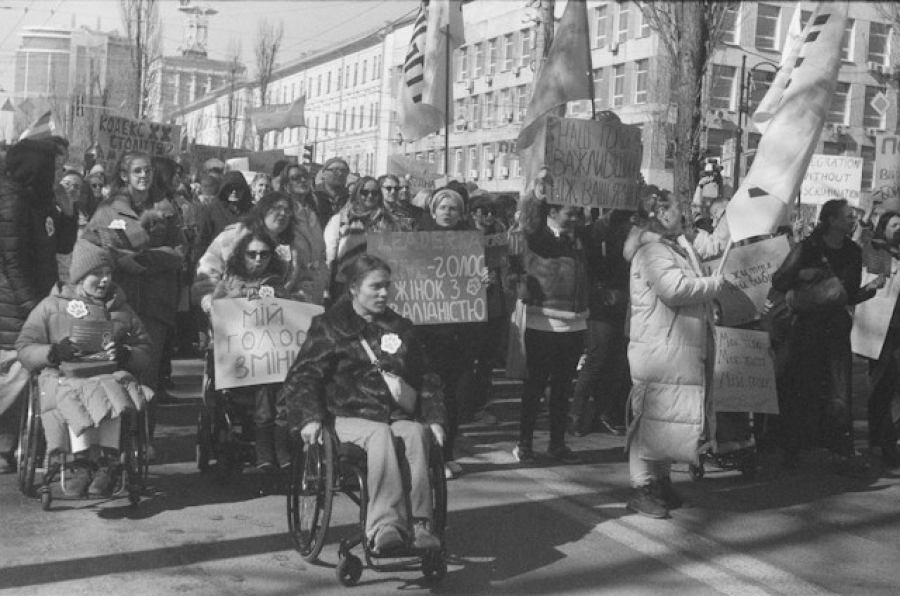
Over the past three decades, armed conflicts have undergone major systemic changes, not only in methods but also in the types of individuals affected. Experts estimate that between 70% and 90% of victims of armed conflict are civilians, showing that civilian harm is no longer collateral damage but a method of warfare where civilians are directly targeted. This shift is evident in the systematic use of explosive weapons in populated areas and attacks on hospitals and schools, highlighting a strategy of terror employed by states and non-state actors. In this context, war-related disabilities are increasing, both physical and psychological, requiring specific attention in terms of rehabilitation, legal protection and post-conflict inclusion.
According to the 2025 Special Report on Weapon Contamination and Victim Assistance by the International Committee of the Red Cross (ICRC), in addition to disabilities caused by mines and explosive remnants of war, weapon contamination, alongside new technologies, create a risky environment long after hostilities end, delaying humanitarian actions and recovery efforts. War-related casualties also include indirect effects like interrupted care for chronic conditions, malnutrition, and pre-existing disabilities. Conflicts amplify pre-existing vulnerabilities, meaning that even mild conditions can deteriorate into permanent disabilities. Despite the existence of international agreements such as the Ottawa Treaty and the Oslo Convention, banning anti-personnel mines and cluster munitions, not all states have ratified them and violations remain frequent. Therefore, progress in banning these indiscriminate weapons can't depend solely on the political will of governments, it must also come from civil society and NGOs.
Conflict-related disabilities are not only a psycho-physical issue, their repercussions extend to social inclusion, employment, education, and healthcare, widening existing gaps for already vulnerable individuals. Disability often brings stigma and isolation, as individuals are perceived as unproductive, while limited employment opportunities and a lack of autonomy reinforce social exclusion. Furthermore, war-related disabilities intersect with gender, class and ethnicity. Women with disabilities often face double discrimination, due to their condition and gender stereotypes limiting access to the workforce and public participation, alongside increased risks of sexual violence. Class dynamics and ethnicity further amplify these inequalities, as low-income individuals and ethnic minorities have less access to resources and face deeper marginalisation.
According to the Disability Rights and Disarmament Initiative report of 2025, the 21st century has seen a shift from a medical model of disability, where the individual is a passive recipient of treatment, to a social and human rights-based model prioritising empowerment and participation. However, concrete cases across the Middle East, Africa, and the Balkans reveal a dangerous gap between this model and practice. In Syria and Iraq, the absence of national inclusion policies has left survivors dependent on external NGO support, while the State’s inability to ensure continuity has prevented long-term care. In South Sudan and Sierra Leone, limited participation in peacebuilding and reconstruction has denied disabled people the opportunity for reintegration as active social actors. Similarly, in post-conflict Bosnia and Herzegovina, civilians with disabilities have frequently been left behind compared to veterans or instrumentalised as nationalist symbols, resulting in inconsistent interventions despite alignment with European Union standards
The Acknowledge, Amend, Assist study by the Harvard Law School Human Rights Program identifies five approaches to addressing civilian victims needs: casualty recording for recognition and memory, civilian harm tracking, voluntary compensation even where there is no legal violation, transitional justice mechanisms, and compulsory state victim assistance. These approaches share the goal of restoring dignity and visibility to victims, therefore becoming a fundamental tool to see the civilian victim not only as a vulnerable individual, but as a social actor whose condition must be at the centre of institutional responses.
As highlighted by the Centre for Research on Civilian Victims of Conflict, humanitarian responses to war-related disabilities are often based on fragmented aid from international agencies and NGOs, without a solid State framework. The result is that international responses prioritise emergency relief over long-term reconstruction, while limited participation in peace processes and social stigma reinforce marginalisation and exclusion.
International actors must explicitly recognise disability within transitional justice, treating individuals not only as a vulnerable category but as full rights-holders and encouraging their active participation in decision-making processes. In conclusion, individuals with war-related disabilities must be included in post-conflict reconstruction from the outset by strengthening legal frameworks on accessibility and social protection and ensuring their active participation in peacebuilding without socio-political barriers.
By Federica Santini


