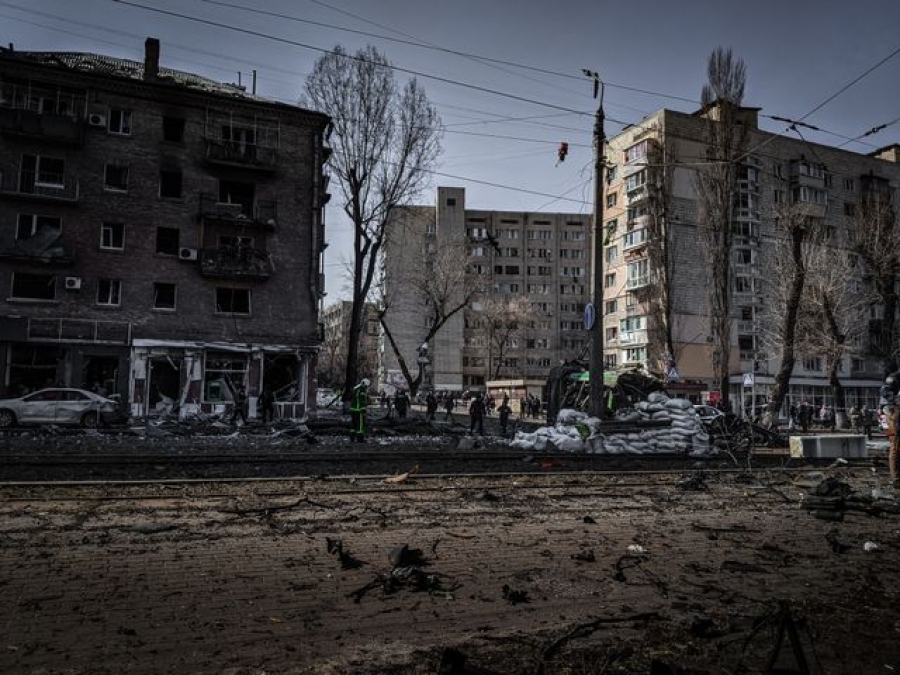
Explosive weapons are a subset of what are commonly referred to as conventional weapons. There are various types of explosive weaponry, including bombs, artillery shells, grenades, missiles, landmines, rockets, artillery projectiles, mortars, and improvised explosive devices that are activated by the detonation of a high explosive substance (materials characterized by a very high rate of reaction, high pressure development, and the presence of a detonation wave). As armed conflicts are increasingly fought in urban areas, the increasing use of wide-ranging weapon systems originally designed for open battlefields has also increased the likelihood of indiscriminate effects and harm to civilians. Weapons with wide-area effects, for instance, produce a large blast area or spread fragments across a wide radius, while those that deliver multiple munitions saturate a large area, increasing the area of risk. Some weapons are so inaccurate that they cannot be directed at specific targets, meaning civilians cannot be meaningfully protected in populated areas.
International humanitarian law governs weapon choices through the regulation of constituent parties’ behaviour and weaponry through international treaties such as the 1925 Geneva Protocol, which outlawed poisonous gases and biological warfare; the 1980 Convention on Certain Conventional Weapons, which restricts various types of munitions while factoring in post-conflict hazards; the 1997 Anti-Personnel Mine Ban Convention, which prohibits landmines and includes provisions to help reduce casualties and assist victims; the 2008 Convention on Cluster Munitions, which binds the 30 ratifying states to reduce harm from these weapons and bolster relevant humanitarian efforts; and, most recently, the Political Declaration on Strengthening the Protection of Civilians from the Humanitarian Consequences Arising from the Use of Explosive Weapons in Populated Areas (EWIPA Political Declaration), adopted in November 2022 and endorsed by 91 countries, making the first formal international recognition of the severe humanitarian consequences resulting from the use of explosive weapons in populated areas.
When explosive weapons are used in populated areas, civilians account for the vast majority of casualties. It is estimated that around 50 million people now suffer from the consequences of urban warfare, a trend that is predicted to continue as populations continue to concentrate in towns and cities. Explosive weapons with wide-area effects have caused significant harm to civilians and civilian infrastructure, while the growing urbanization of armed conflict has exposed millions more civilians to their effects.
Deaths and injuries have occurred in the tens of thousands in countries such as Syria, Afghanistan, Yemen, Ukraine, and the Gaza Strip. The non-governmental organization Action on Armed Violence (AOAV) reported that in 2025, 91% of global casualties from explosive weapons were civilians. They also reported that in nearly every year of the past decade, civilians have consistently borne the brunt of this violence, accounting for 73% of the total casualties from explosive weapons. AOAV has stated that when explosive weapons are used in populated areas, at least nine out of ten casualties are likely to be civilians. Incidents were recorded in 123 countries and territories around the world in the last ten years, with the countries seeing the highest number of civilian deaths and injuries being Syria, Iraq, Afghanistan, Pakistan, and Yemen. These weapons also frequently damage or destroy crucial civilian infrastructure, including bridges, water pipes, power stations, hospitals, and schools, impacting essential services and creating additional humanitarian pressure through forced displacement.
Human Rights Watch and other organizations have urged countries to clarify international humanitarian law by explicitly outlawing the use of these weapons in populated areas and commit to developing and revising relevant laws, policies, and military doctrine, as well as assisting victims of explosive weapons and supporting reconstruction efforts. There is currently no specific prohibition against the use of explosive weapons in populated areas aside from the outlawing of particular weapons, such as antipersonnel landmines and cluster munitions. The lack of a legally binding and multilateral instrument for these types of weapons continues to create ambiguity and fragmentation in the international approach to minimizing the impact on civilians.
By Megan Xing


