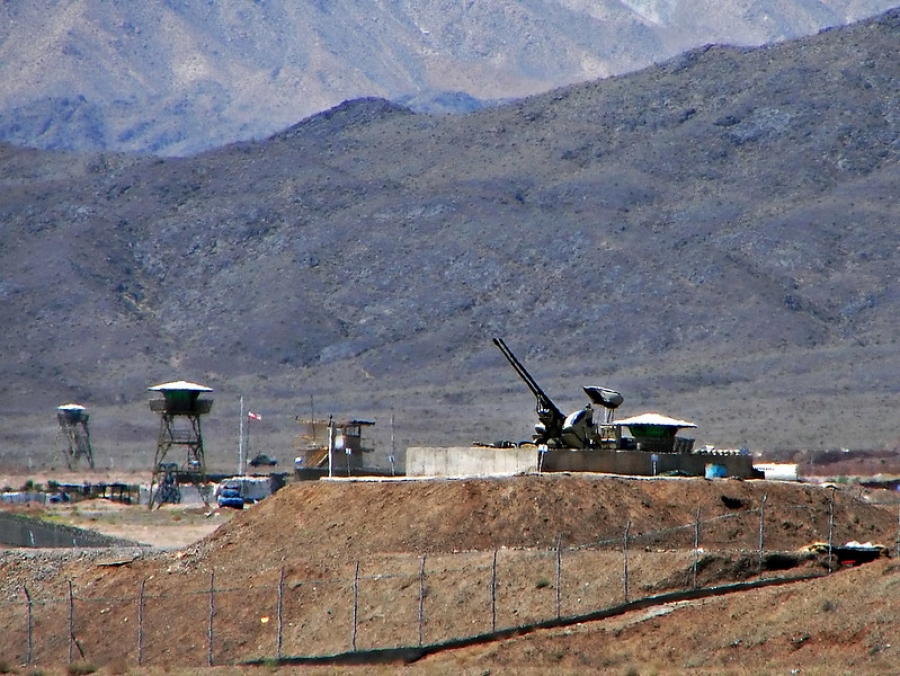
Since 13 June 2025, Israel and Iran have undergone a rapid and continuous military escalation. It began shortly after the International Atomic Energy Agency (IAEA) found Iran in violation of its nuclear nonproliferation obligations , when Israel launched a volley of air strikes on Iran's capital city of Tehran, targeting nuclear sites and missile capabilities.
The attack sought to prevent Iran from developing nuclear weapons and to overthrow the government of Supreme Leader Ayatollah Ali Khamenei. Iran retaliated by launching more than 300 missiles and hundreds of drones aimed at military and defense-related sites in Israel, but has also hit civilian sites, including a hospital. Israel and Iran's aerial war is now entering its second week, with a mounting tally of civilian fatalities.
For several decades, Israel and Iran have engaged in proxy wars and indirect conflict. Much of their interaction has remained mostly covert, with Iran supporting proxy groups like Hamas and Hezbollah against Israel, while Israel was blamed for several targeted assassinations, blasts, and a cyberattack aimed at slowing Iran's nuclear program. Since the Hamas-led attacks of 7 October 2023 and the beginning of Israel's war in Gaza, the interactions between Israel and Iran have expanded into a much more open confrontation.
Throughout this escalation, civilians have borne the brunt of the impact, with a rapidly rising number of deaths and injuries and significant damage to civilian infrastructures . Both Israeli and Iranian military forces have issued evacuation warnings, leading to widespread panic among civilians and floods of refugees fleeing Tehran and Israel .
With a population of over 10 million, evacuation from Tehran has proved near-impossible, with bumper-to-bumper traffic crowding roads leading out of the city and cross-country fuel shortages resulting in miles-long queues at petrol stations. In both countries, governments have taken significant control over the flow of information , with Iran disrupting access to the Internet and instant messaging applications, and Israel using security pretexts to target people over posts and video sharing that are deemed to violate strict censorship rules. Over the course of the conflict, air strikes have killed more than 200 civilians in Iran and at least two dozen in Israel.
Since the onset of the aerial war, UN High Commissioner for Human Rights Volker Türk has called for “maximum restraint” and emphasized the importance of both states' adherence to international humanitarian law. The Office of the UN High Commissioner for Refugees (UNHCR) has also expressed grave concern over the deteriorating humanitarian situation . Additionally, this conflict has triggered international concern, with European leaders pushing for Iran to return to negotiations and US President Donald Trump approving preliminary plans to attack Iran, though he has yet to make a final decision on whether to use them.
By Megan Xing


