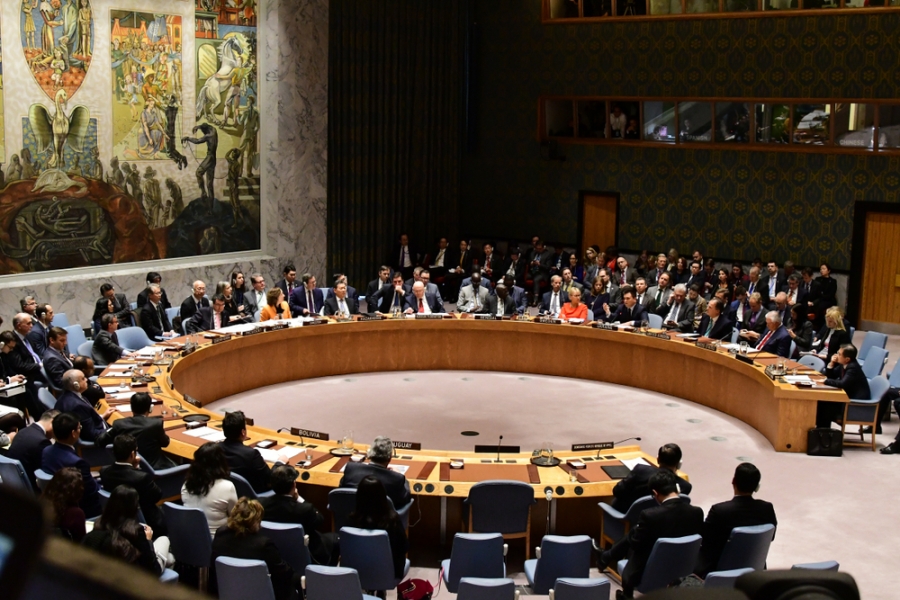
In 2025, one civilian was killed in armed conflict every 14 minutes. This is one of the starkest findings in the latest United Nations Secretary-General report on the protection of civilians in armed conflict (S/2026/390), which portrays an international system increasingly unable to prevent or reduce civilian harm.
According to the report, more than 37,000 civilians were killed across 20 armed conflicts during the year. The figure is likely an undercount because of limited access to war zones and verification constraints. Gaza, Sudan, Ukraine, Myanmar and the Democratic Republic of the Congo emerge as some of the most devastating contexts. In Gaza alone, at least 20,000 Palestinians were reportedly killed or recovered from under the rubble in 2025.
The report highlights that civilian harm extends far beyond deaths and injuries. It also includes the collapse of essential infrastructure. In Sudan, attacks on power plants, dams and water systems affected more than 75% of households. In Ukraine, 429 attacks against energy infrastructure were documented, while more than 80% of infrastructure in Gaza had been damaged by the end of 2025.
The deterioration of healthcare protection is particularly alarming. The United Nations recorded 1,356 attacks against healthcare in 18 conflict settings, causing 1,980 deaths and 1,175 injuries. Data from the WHO Surveillance System for Attacks on Healthcare show a dramatic increase compared with 2018, when 802 incidents were recorded.
Conflict is also driving famine and hunger. According to the IPC food security classification cited in the report, 147 million people across 19 countries and territories faced acute food insecurity primarily caused by conflict and insecurity. For the first time in two decades, two famines were confirmed in the same year: Sudan and the Gaza Strip. In Gaza, 32% of the population reached catastrophic levels of food insecurity.
Forced displacement also remains at historic levels. By June 2025, 117.3 million people had been forcibly displaced worldwide, including 67.8 million internally displaced persons and 42.5 million refugees, according to UNHCR and the Internal Displacement Monitoring Centre.
The report also focuses on the technological transformation of warfare. Drone attacks increased by 4,000% between 2020 and 2024, while the military use of artificial intelligence raises growing concerns over the erosion of human control and the expansion of civilian harm into digital and information domains.
One of the report’s most significant findings concerns the widening gap between norms and implementation. The Secretary-General argues that the crisis does not stem from a lack of international humanitarian law, but from the lack of political will to enforce it. The report further stresses that even formally lawful military operations can produce devastating civilian harm, calling on States to strengthen civilian harm tracking, mitigation and accountability mechanisms.
The report closes with a powerful political message: while global military spending reached $2.7 trillion in 2024, just 1% of that amount would be enough to fund the entire UN global humanitarian appeal.
By Sara Gorelli


