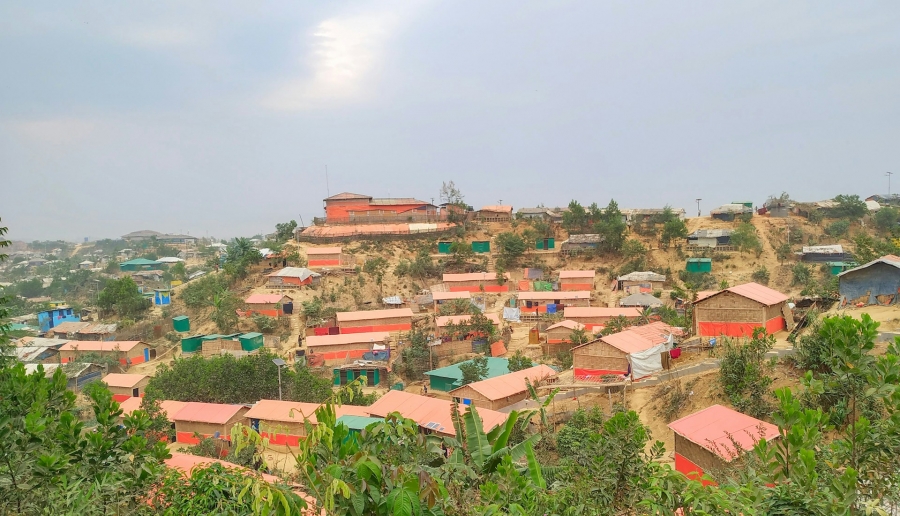
Up to 11.6 million people fleeing conflict, persecution, and disaster are at risk of losing humanitarian assistance this year, the United Nations High Commissioner for Refugees (UNHCR) has warned. In its latest report, On the brink: The devastating toll of aid cuts on people forced to flee, published in July, the UN refugee agency paints an alarming picture, assessing the scale and consequences of humanitarian funding reductions since the beginning of 2025. These cuts have threatened UNHCR’s ability to support refugees, internally displaced people (IDPs), and asylum seekers.
Drawing on the UNHCR’s global operations in over 500 locations, the report examines aid cuts across core humanitarian sectors, including protection, health, shelter, and education. The analysis combines internal operational and financial data, such as the number of people supported in 2024, 2025 budget requirements, information on programs cut or suspended, with case examples from specific country operations and public mid-year funding updates. Assuming current funding levels continue through 2025, the report shows where and how assistance is being scaled down and explains what this means for the people who rely on them.
The figures are striking. Due to reduced financial resources, UNHCR is facing a substantive shortfall of $8.1 billion against a total budget of $10.6 billion this year. By mid-2025, contributions had covered only 23 percent of the agency’s funding requirements. The agency has had to scale down its activities and workforce by one-third compared to 2024. This has resulted in millions of displaced people being at risk of losing access to essential humanitarian assistance.
The report estimates that $1.4 billion in essential programs are being cut, impacting key sectors in the UNHCR global response: from a 60 percent reduction in financial aid to steep declines in health, education, shelter, and protection programs. These budgetary cuts are compounding factors of risks for the most in need, especially children and women, since critical services, such as registration, legal aid, and gender-based violence prevention, have decreased or been suspended.
The consequences are already visible. In Afghanistan, protection programs for women and girls have been reduced by more than half, and in South Sudan, 75% of safe spaces for women and girls have closed, leaving survivors without medical, psychosocial, or legal assistance. In Bangladesh and Uganda, reductions in funding are threatening children’s right to education, putting tens of thousands of Rohingya children at risk of losing access to school and causing classroom overcrowding in Uganda due to teacher shortages. Health care systems for refugees are also under severe strain: in Lebanon and in Niger, access to primary care and safe drinking water remain critical for thousands of people. In Chad, hundreds of thousands of Sudanese refugees remain trapped in unsafe border areas without adequate shelter or protection, increasing their vulnerability to violence and exploitation.
Decline in humanitarian support is putting years of progress in refugee protection and legal assistance at stake. In countries like Colombia, Ecuador, Costa Rica, and Mexico, severe funding shortages are weakening asylum systems and legal protection efforts. Without legal status, refugees face poverty, exploitation, and exclusion from formal work. Cuts to integration and support programs are increasing xenophobia, straining communities, and driving further displacement instead of long-term solutions.
In an attempt to respond to these challenges, UNHCR has prioritised safeguarding field programs and addressing the most urgent protection and life-saving needs. It has increased the share of limited funding channeled to local and national partners and prioritised regional response plans, focusing first on lifesaving assistance while deferring most long-term integration efforts. However, with needs rising and resources shrinking, these measures remain insufficient: millions of people still risk being left without basic support, highlighting the scale of the crisis and the impossibility of meeting needs without renewed support.
This humanitarian emergency did not arise overnight, but it is the result of global political and financial decisions that have drastically reduced international support. Although not explicitly mentioned in the UNHCR report itself, this funding gap is directly linked to major cuts in humanitarian aid by the USA and key European countries, which have deepened the shortfall at a moment of unprecedented displacement. The human impact is profound: as UNHCR Director of External Relations Dominique Hyde stresses, behind every cut or suspended program there are families who risk seeing lifelines and support systems vanishing before their eyes.
To reverse this trend, UNHCR calls for renewed international solidarity, with particular emphasis on flexible funding mechanisms. Flexible contributions enable the agency to respond rapidly to emergencies, sustain essential services, and allocate resources to where they are most needed, without being tied to specific countries or sectors.
While flexible funding alone cannot fully resolve the crisis, such contributions are vital to meet the urgent needs of displaced people worldwide - an urgent appeal to public and private donors to step forward with broader and bolder support now more than ever.
To read more, please visit:


