The report was created by Action on Armed Violence (AOAV), a London-based civil society organization that records and investigates evidence of armed violence against civilians internationally. AOAV's mission prioritizes the respect and protection of civilians in armed violence/conflict. Its scope reaches transnational boundaries, including the UN, the UK parliament, and many other think tanks. AOAV focuses on reducing armed violence by researching and advocating against explosive weapons in populated areas. Most of their research is cited in academic literature as well. The organization has played a crucial role in securing major international disarmament agreements, including the Geneva Declaration on Armed Violence and Development (2006), the Oslo Commitments on Armed Violence (2010), the Arms Trade Treaty (2014), and the UN Programme of Action on Small Arms and the international political Declaration on Explosive Weapons in 2022
Methodology
AOAV adapted an incident-based methodology used by Landmine Action and Medact in 2009, based on the Robin Coupland and Nathan Taback model. Data on explosive reports is procured from English-language media reports on the date, time, and location of the incident. The reports also gather the number and circumstances of those killed/injured, the weapon type, the victim and offender, and whether the displacement or damage to the affected location was reported. It must be noted that no claims are made that AOAV data captures every incident/casualty of explosive violence. An RSS reader scans Google News for key terms related to explosive violence to record incidents of explosive weapons. An incident is only recorded if at least one casualty is reported, with a clear date and specific location. Reports that use vague casualty estimates like "several" or "numerous" are excluded, and the most detailed or recent sources are prioritized. The intended target of an attack is only recorded if it is declared by the perpetrator, clearly reported, or implied by the circumstances (e.g., an IED placed on a police vehicle).
Despite this structured methodology, several limitations exist. Under-reporting is likely, particularly in certain regions, due to the sole use of English-language media used. Incidents spanning more than 24 hours are not recorded; casualties from injuries sustained in attacks but resulting in death later are not systematically tracked. In cases where firearms and explosive weapons are used together, casualty attribution may be unclear as well. While AOAV's methodology effectively captures immediate harm caused by explosive weapons, it does not fully account for their lasting consequences or cumulative effects on populations.
Key findings
The report covers data from the beginning of the Russian invasion of Ukraine, from 24th February 2022 to 19th February 2025.
Total Casualties:
- Overall casualties: 36,028 (including both civilian and non-civilian)
- Total civilian casualties: 31,791
- Killed: 7,676
- Injured: 24,115
Civilian Casualties by Demographics:
- Children: 1,334
- Women: 3,113
- Men: 3,794
Weapons Responsible for Civilian Casualties:
- Ground-launched weapons (missiles, artillery, rockets): 58% (18,566)
- Air-launched weapons: 21% (6,757)
- Multiple weapon types: 5% (1,621)
- Naval-launched weapons, IEDs, and landmines: 2% (541)
Most Impacted Regions (Civilian Casualties):
- Donetsk: 8,870
- Kharkiv: 5,415
- Kherson: 5,335
- Dnipropetrovsk: 2,575
- Zaporizhzhia: 2,105
Locations with the Most Civilian Casualties:
- Urban residential areas: 12,219
- Multiple urban areas: 9,239
- Villages: 3,752
- Unspecified locations: 1,339
- Entertainment venues: 795
- Commercial premises: 568
Historical Data (2014–2021):
- Total recorded deaths/injuries: 5,242
- Civilian casualties: 2,381 (88% caused by explosive weapons in populated areas)
- Ground-launched weapons (shelling, mortars, rockets, grenades) since 2014: 2,459 civilian casualties
Conclusions and Recommendations
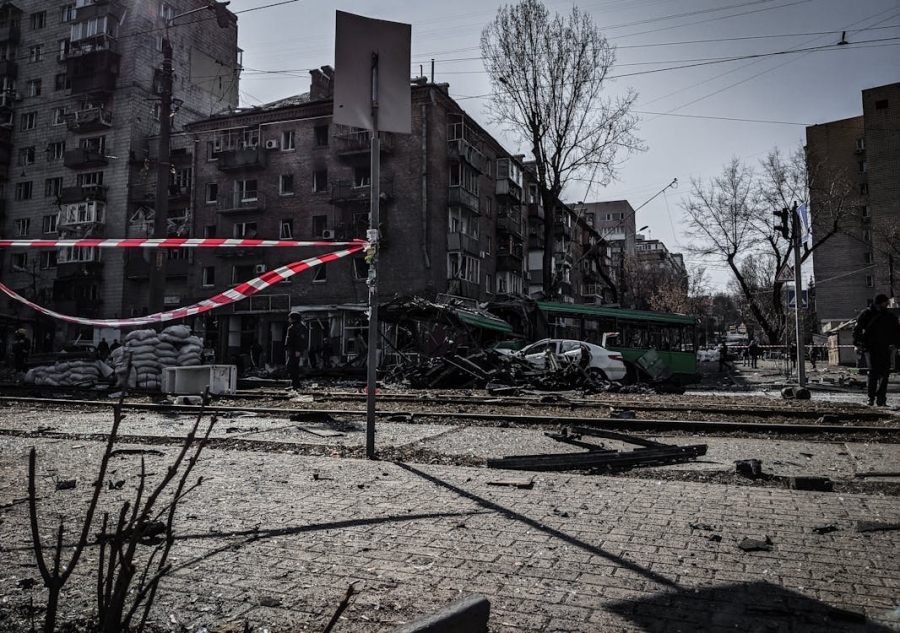
Data consists of the ongoing invasion of Ukraine, including Russian airstrikes, missile strikes, and artillery shelling in densely populated urban centres, apartment buildings, schools, hospitals, and civilian infrastructure. The reports uncover Russia’s war crimes in occupied towns/villages through Ukrainian survivors and journalists’ on-the-ground testimonies. The UN estimates that over a million people - mostly women and children - have fled Ukraine to Poland, Hungary, and Slovakia. However, men ages 18-60 have been banned from leaving, leaving millions of civilians in Ukraine to shelter from Russian aggression. The reports indicate a growing increase in violence, highlighting how disastrous the conflict is for civilians. AOAV explicitly condemns the use of violence against civilians and the use of explosive weapons in populated areas. Thus, all armed actors must stop the use of explosive weapons with wide-area effects, likely to destroy the livelihood of large populations of civilians.
https://aoav.org.uk/2025/ukraine-casualty-monitor/
By Samuel Mushailov


